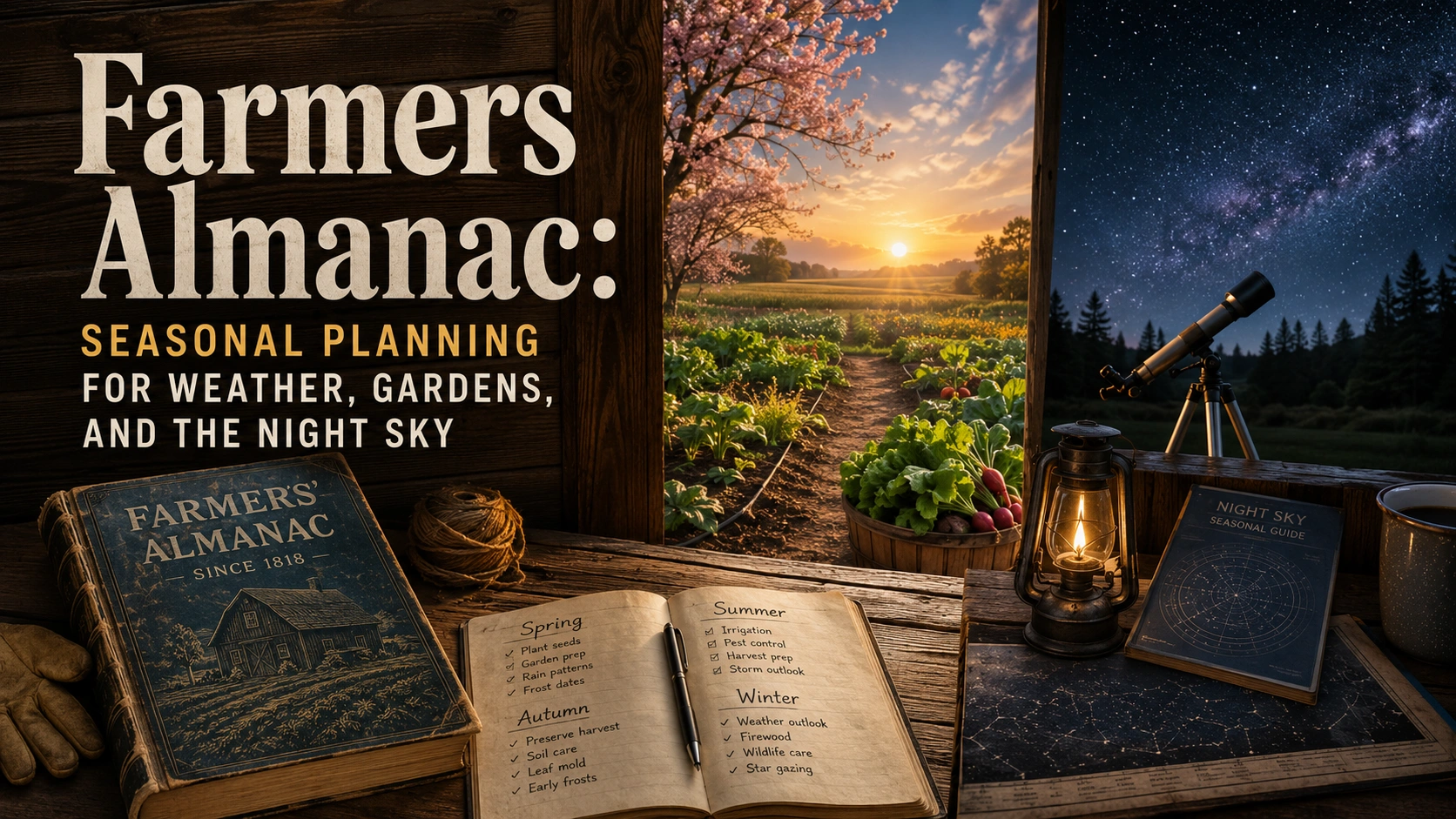

Farmers Almanac Guide: Weather, Gardening, Moon Phases & More
A farmers almanac is an annual seasonal guide that combines broad weather outlooks, planting calendars, Moon phases, astronomical dates, practical advice, and folklore. It is useful for planning and seasonal awareness, but it is not a replacement for a current local weather forecast or official warning.
What the Term Can Mean
“Farmers almanac” may describe the general kind of yearly reference book, or it may be used informally to mean one of two separate publications: Farmers’ Almanac and The Old Farmer’s Almanac.
Both cover related subjects, including weather, gardening, calendars, Moon information, and seasonal traditions. Before using a forecast or date, confirm the exact title, edition year, region, and tool you are viewing.
What an Almanac Offers
A farmers almanac usually collects information that helps people think ahead through the year.
- Seasonal weather outlooks
- Garden and planting calendars
- Moon phases and full Moon dates
- Sunrise and sunset information
- Solstices, equinoxes, and annual sky events
- Household tips, recipes, sayings, and folklore
This combination comes from the almanac’s traditional role as a compact household reference for seasonal life.
Use Weather Outlooks Carefully
An almanac’s weather material is best used for broad perspective, such as considering possible seasonal patterns or preparing generally for a changing season. It cannot reliably tell you what conditions will occur at a specific address on a particular day.
| Information source | Best use | Do not use it for |
| Current local forecast | Near-term plans, travel, outdoor work | Predicting an entire season |
| Seasonal outlook | Broad planning for possible patterns | Exact daily weather |
| Climate outlook | Understanding longer-term probabilities | Specific storms or rainfall totals |
| Official warning | Immediate safety decisions | Long-range seasonal planning |
Weather changes as temperature, moisture, wind, air pressure, clouds, and storms shift in the atmosphere. For anything time-sensitive or safety-critical, use current local forecasts and official alerts.
Garden Planning Comes First
A planting calendar can be helpful, but local conditions should guide the final decision. A suggested date means little if the soil is cold, frost is still possible, heavy rain is expected, or the crop does not suit the site.
A Practical Planting Order
- Find the expected frost window and growing season in your area.
- Choose varieties suited to your climate and the time of year.
- Check soil temperature, drainage, fertility, and moisture.
- Confirm sunlight, airflow, and available space.
- Review the current forecast for frost, heat, storms, or heavy rain.
- Use an almanac calendar as an optional planning aid.
Moon-Phase Gardening
Some farmers almanacs include garden dates based on Moon phases. This is a longstanding traditional practice that some gardeners use to organize tasks such as planting, pruning, and harvesting.
Moon-phase timing should be treated as optional tradition, not as a guarantee of better growth or larger harvests. More direct influences on garden success include crop choice, frost timing, soil, light, water, pest management, disease prevention, and current weather.
A Calendar for the Sky
Astronomical calendars are among the most dependable parts of an almanac because lunar and seasonal cycles can be calculated in advance. They help readers notice changes that ordinary date calendars can overlook.
Useful Sky Dates
- New Moon, quarter Moon, and full Moon phases
- Changing sunrise and sunset times
- Solstices, marking seasonal daylight extremes
- Equinoxes, when day and night are close to equal
- General seasonal skywatching opportunities
A Moon calendar can tell you when a lunar phase occurs. It cannot tell you whether local clouds, rain, haze, or visibility will allow you to see it.
Weather, Climate, Astronomy, and Folklore
These topics share a place in almanacs because each relates to the passing year. They should not be confused with one another.
Weather
Weather is the short-term state of the atmosphere in a particular place. It includes temperature, precipitation, wind, humidity, cloud cover, and storms.
Climate
Climate is the long-term pattern of weather in a region. Climate outlooks describe broad probabilities over extended periods, not guaranteed conditions on individual days.
Astronomy
Astronomy studies objects and events beyond Earth’s atmosphere, including the Sun, Moon, planets, stars, lunar phases, solstices, and equinoxes.
Folklore
Folklore includes traditional sayings and seasonal customs. It can be enjoyable and culturally meaningful, but it should not replace evidence-based gardening advice, current forecasts, or official safety guidance.
Why Readers Still Use Almanacs
Almanacs remain appealing because they combine useful information with a sense of seasonal rhythm. They encourage readers to pay attention to growing seasons, daylight, lunar cycles, and changes in local conditions.
Use a farmers almanac as a source of planning ideas, seasonal context, and tradition. Use current local forecasts and official alerts whenever the weather affects safety, travel, crops, property, or immediate decisions.
Read more: Farmers Almanack: A Seasonal Guide for Weather, Gardening, and the Sky
Frequently Asked Questions
No. They are separate publications with similar subject areas.
No. Almanac outlooks are better used for broad seasonal context, while current local forecasts are more appropriate for near-term planning.
Use it after checking local frost timing, soil conditions, sunlight, crop suitability, and the current weather forecast.
No. Moon-phase planting is a traditional practice, not a guarantee of improved garden results.
Moon phases are predictable astronomical events that support calendar planning, seasonal awareness, and casual skywatching.
Weather describes short-term atmospheric conditions, while climate describes long-term weather patterns in a region.
No. For severe weather, rely on current local forecasts and official emergency aler