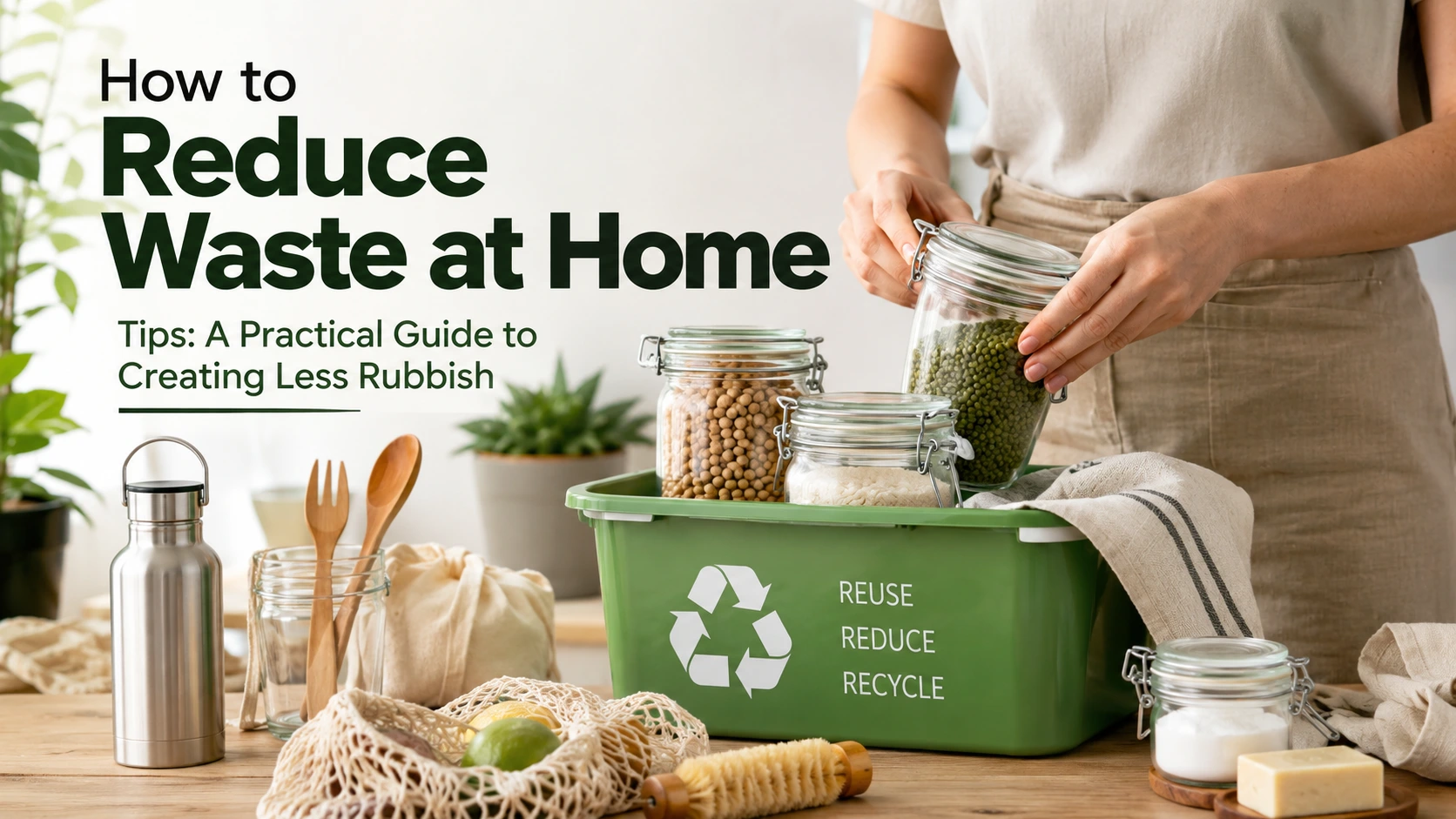

Waste Happens Before the Bin
The easiest way to create less household rubbish is to make fewer disposable purchases, use what you own for longer, and deal with leftovers before they become waste. These how to reduce waste at home tips focus on practical routines rather than expensive replacements or an all-or-nothing lifestyle.
Start by noticing what fills your bin most often. Then choose one change that prevents that kind of waste at the source.
1. Start With a One-Week Bin Check
A quick look at your household rubbish can reveal where your effort will matter most. For one week, take note of what you throw away most often: food scraps, plastic packaging, paper, disposable cleaning products, delivery boxes, or worn-out items.
You do not need to measure or sort every item in detail. The goal is to identify the top one or two waste categories and respond to those first.
| If You Notice Mostly… | A Useful First Change |
| Spoiled food and leftovers | Plan meals and store older food where it is easy to see |
| Plastic packaging | Choose loose, refillable, or minimally packaged products |
| Paper and mail | Select digital bills and reduce unwanted post |
| Disposable household products | Use washable, refillable, or durable alternatives as items run out |
| Unwanted possessions | Borrow, repair, donate, or buy secondhand more often |
2. Follow the Better-Than-Recycling Order
Recycling is useful, but it should not be the first solution. A more effective order is to reduce, reuse, repair, compost suitable organic material, and then recycle what local systems accept.
| Priority | What It Looks Like at Home |
| Reduce | Buy only what you need and avoid unnecessary packaging |
| Reuse | Refill bottles, use reusable bags, and save useful containers |
| Repair | Mend clothes or fix products before replacing them |
| Compost | Process suitable food scraps and garden material |
| Recycle | Sort accepted materials according to local guidance |
This approach keeps materials in use longer and prevents some waste from being created in the first place.
3. Make Food Shopping More Intentional
Food can become waste before it is ever cooked, usually because too much is purchased or existing ingredients are overlooked. Before shopping, check the fridge, freezer, and pantry, then build a list around the meals you expect to eat.
Plan meals around ingredients that need using soon. Buy fresh foods in amounts your household can realistically finish, especially when they spoil quickly.
- Check existing supplies before making a list.
- Plan a few meals before you shop.
- Avoid buying perishables just because they are on offer.
- Keep a note of items that need using first.
- Include leftovers in your meal plan.
4. Use Older Food First
The FIFO method means “first in, first out.” Put older groceries at the front of your fridge, freezer, or cupboard, and place newer purchases behind them.
This small storage habit makes food easier to see and use before it spoils. Clear, labelled containers can also make leftovers and frozen food less likely to be forgotten.
When ingredients are close to their best, use them in flexible meals such as soups, stir-fries, curries, sauces, smoothies, or packed lunches. Freeze suitable extras instead of waiting until they must be discarded.
5. Choose Less Packaging
Packaging becomes household waste as soon as it crosses your door, so reducing it begins while shopping. When products serve the same purpose, choose the one with less packaging or an option you can refill.
- Buy loose fruits and vegetables when available.
- Carry reusable bags for groceries and other shopping.
- Use a refillable water bottle.
- Pack meals and leftovers in reusable containers.
- Choose concentrates or refills where practical.
- Switch to bar soap or refill systems if they suit your household.
Buying in bulk can reduce packaging for shelf-stable items, but only buy larger quantities when you have space and will use them. A bulk purchase that becomes unused food or clutter is not a waste-reduction win.
6. Compost What Cannot Be Eaten
Composting can turn suitable food scraps and yard materials into a soil amendment for gardens and potted plants. A simple compost system generally needs food scraps or other nitrogen-rich “greens,” dry carbon-rich “browns” such as leaves or plain cardboard, moisture, and air.
A small covered container can collect scraps in the kitchen until they are added to an outdoor compost pile, worm system, community compost point, or food-waste collection service.
- Use fruit and vegetable scraps, coffee grounds, tea materials, and yard trimmings where appropriate.
- Add dry leaves, twigs, or uncoated cardboard to balance wetter food scraps.
- Keep the mixture damp, not soaked.
- Turn an outdoor pile from time to time to help air circulate.
- Check the requirements of your composting system before adding meat, dairy, or oily foods.
If you do not have outdoor space, see whether your area has a food-waste bin, community composting, or another shared organic-waste option.
7. Replace Single-Use Items Slowly
You do not need to throw away usable products to create a lower-waste home. Use what you already have, then choose reusable, refillable, or durable options when replacements are needed.
Bathroom Choices
- Use bar soap, shampoo bars, or refillable dispensers where suitable.
- Consider a reusable razor instead of disposable razors.
- Use washable cloths for routine cleaning instead of relying entirely on disposable wipes.
- Reuse containers for organizing small items, if you have a real purpose for them.
Laundry Choices
- Use reusable dryer balls rather than disposable dryer sheets.
- Air-dry clothes when it is practical.
- Measure detergent to avoid using more than needed.
- Repair buttons, hems, and small tears before replacing clothing.
- Choose refillable or concentrated laundry products if they are available and useful to you.
8. Reduce Paper Before It Piles Up
Paper waste often arrives gradually through bills, catalogues, receipts, school notes, and parcel packaging. Changing a few settings can prevent it from entering your home or becoming clutter.
- Choose paperless bills and statements.
- Request digital receipts when available.
- Opt out of unwanted catalogues and promotional post.
- Print only what needs a physical copy.
- Use the blank side of paper for notes.
- Reuse clean boxes and packing paper for storage, sending parcels, or crafts.
9. Keep Useful Things in Use
Before replacing an item, ask whether it can be repaired, borrowed, shared, repurposed, or bought secondhand. These choices reduce the number of new items that eventually become household waste.
Choose secondhand options for clothing, furniture, books, tools, and household goods where condition and safety make sense. Donate, sell, or pass along items that are still usable instead of adding them to general rubbish.
A jar may become storage for dry food or craft supplies. A worn cotton T-shirt may become cleaning cloths. A chipped cup may be useful as a pen holder or a small planter.
10. Recycle According to Local Rules
Recycling is most useful after you have considered reducing, reusing, repairing, and composting. Collection rules differ across locations, so follow your local authority or waste-service guidance rather than relying on a general list.
Food residue, non-accepted materials, and mixed items can make sorting more difficult and may contaminate other recyclables. When in doubt, find out whether an item is accepted instead of putting it into the recycling bin hopefully.
- Empty containers and follow local instructions for cleaning them.
- Separate materials where required.
- Keep unaccepted items out of recycling.
- Use approved collection points for batteries, electronics, chemicals, paint, and similar household items.
- Keep local bin guidance close to your disposal area.
Build a Routine You Can Maintain
Waste reduction works best when it is convenient. Store reusable bags near the door, keep a shopping list on your phone, position food containers close to where meals are prepared, and make a visible place for food scraps if you compost.
Avoid trying to change every habit at once. Use your one-week bin check to choose the first improvement, keep it going until it feels routine, and then add another. A home does not need to be perfectly zero-waste to produce noticeably less rubbish.
Read more: How to Reduce Waste at Home Tips: A Practical Guide to Creating Less Rubbish
Frequently Asked Questions
Identify the most common waste in your bin and prevent that category first. Meal planning, reusable bags, refillable bottles, and choosing less packaging are easy starting points.
No. Recycling can be useful, but reducing purchases, reusing items, repairing products, and composting suitable organic material generally come first.
Check existing food before shopping, plan meals, use older groceries first, store food correctly, save leftovers, and freeze suitable excess food.
Yes. Reuse containers and cloths you already own, plan meals, print less, repair simple items, buy only what you need, and donate usable possessions.
Many systems accept fruit and vegetable scraps, coffee grounds, tea materials, dry leaves, small twigs, and uncoated cardboard. Always follow the rules for your particular compost system.
Only when you will use the product. Bulk buying can reduce packaging, but it can create waste if food spoils or an item remains unused.
Use up existing products, then choose durable options such as bar soap, refillable dispensers, reusable razors, washable cloths, and products with less packaging where practical.
Repair, donate, sell, share, borrow, or repurpose them before disposal. Local secondhand shops, community groups, and repair services may offer useful options.
Check local recycling instructions, keep food-contaminated or unaccepted items out, and use specialist drop-off points for batteries, electronics, chemicals, and similar materials.