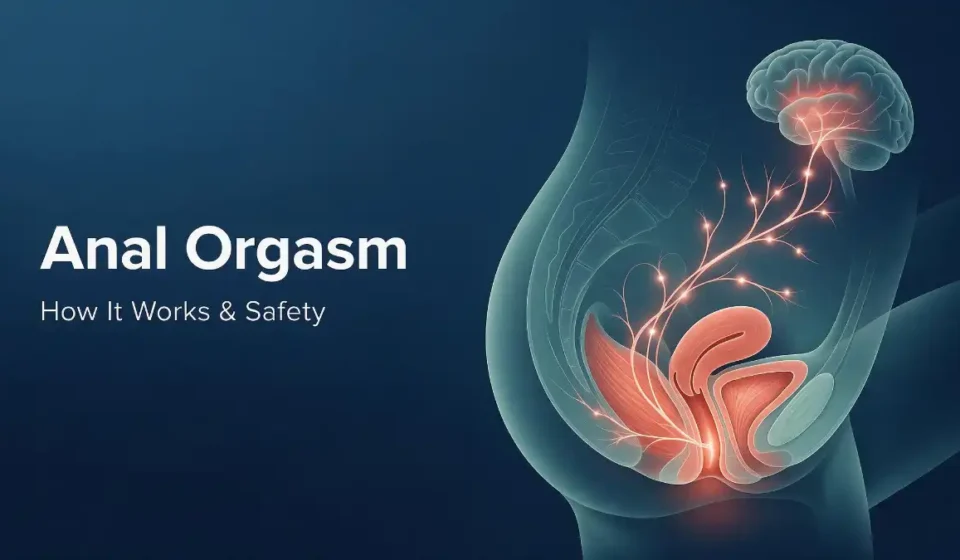

An anal orgasm is an orgasm that occurs during or is associated with stimulation of the anus, anal canal, or nearby pelvic structures. Some people can reach orgasm through anal stimulation, while others experience pleasure without climaxing. Sensory nerves, sexual arousal, and pelvic floor muscles all play a role. A prostate isn’t necessary, so people with different reproductive anatomies may experience anal pleasure or orgasm.
The anus and surrounding pelvic region contain nerve endings that respond to touch, pressure, and movement. Stimulation of these areas may contribute to sexual arousal, either on its own or alongside penile, clitoral, or other stimulation. How someone responds depends on their anatomy, nerve sensitivity, comfort, and psychological arousal.
| Aspect | Key Information |
| Definition | Orgasm associated with anal or nearby pelvic stimulation |
| Anatomy | Anus, anal canal, rectum, perineum, sensory nerves, and pelvic floor muscles |
| Mechanism | Sensory signaling, brain-mediated arousal, and muscular responses |
| Prostate involvement | May contribute to orgasm in people with a prostate, but isn’t necessary |
| Individual variation | Some people experience orgasm, others feel pleasure without orgasm, and some find stimulation uncomfortable |
| Basic safety | Consent, lubrication for penetration, hygiene, STI prevention, and avoiding pain |
How Does an Anal Orgasm Work?
An anal orgasm involves signals traveling between sensory nerves, the brain, and muscles involved in sexual response. The anus is the external opening of the digestive tract, and the anal canal connects it to the rectum. The perineum is the area between the genitals and anus, while the pelvic floor muscles support pelvic organs and help coordinate certain sexual responses.
The pudendal nerve carries sensory information from the anal region, perineum, and external genitals. Other pelvic nerve pathways, including autonomic nerves, contribute to internal sensations and sexual function. These pathways work together rather than relying on a single nerve to produce orgasm.
When stimulation feels pleasurable, the brain processes those sensory signals alongside sexual arousal, emotions, and other factors. Orgasm may involve involuntary, rhythmic contractions of the pelvic floor muscles, accompanied by an intense sensation of sexual release.
Still, an orgasm isn’t simply a reflex caused by pressure on one particular spot. Comfort, psychological arousal, personal sensitivity, and stimulation of other body areas can all influence whether someone reaches climax.
For people with a prostate, stimulation through the rectal wall may indirectly affect the gland. The prostate sits below the bladder and in front of the rectum, making this type of stimulation anatomically possible. Although it can contribute to sexual pleasure, it doesn’t guarantee an orgasm.
Can Anyone Experience an Anal Orgasm?
People with or without a prostate may experience an orgasm associated with anal stimulation. However, not everyone enjoys these sensations, and there’s no proven method that reliably produces an anal orgasm for everyone.
Sexual responses vary with anatomy, nerve sensitivity, arousal, comfort, and personal preferences. Some people reach orgasm through anal stimulation alone. Others find that additional genital stimulation contributes to their experience, while some don’t experience anal pleasure at all.
What Does an Anal Orgasm Feel Like?
There’s no single sensation that defines an anal orgasm. Some people describe pleasure that gradually builds, followed by pelvic muscle contractions or a feeling of release that differs from orgasms associated mainly with genital stimulation.
Others notice little difference between an anal-associated orgasm and orgasms they’ve experienced through other forms of stimulation.
Although some people describe anal orgasms as particularly intense, reliable comparative evidence is limited. There’s no established basis for claiming they’re consistently stronger, longer-lasting, or more satisfying than other orgasms.
Anal Orgasm vs. Prostate Orgasm and Other Orgasms
Anal orgasms and prostate-associated orgasms are closely related, but the terms don’t mean the same thing.
A prostate orgasm refers to an orgasm associated with stimulation of the prostate gland. An anal orgasm is a broader description that includes experiences not involving the prostate.
| Orgasm Type | Associated Structures | Important Distinction |
| Anal orgasm | Anus, anal canal, and surrounding pelvic structures | Can occur without prostate stimulation |
| Prostate orgasm | Prostate gland | Involves prostate-associated stimulation |
| Penile orgasm | Penis and related sensory pathways | Often accompanies ejaculation, but not always |
| Clitoral orgasm | Clitoris and related sensory pathways | Doesn’t require anal or prostate stimulation |
These aren’t necessarily separate or mutually exclusive experiences. Someone might reach orgasm while receiving anal and genital stimulation simultaneously, making it difficult to identify which sensations contributed most.
Orgasm and ejaculation are also different physiological processes. Orgasm involves neurological and muscular responses associated with sexual climax. Ejaculation is the expulsion of semen. Although they commonly occur together in people with typical male reproductive anatomy, it’s possible to experience orgasm without ejaculating.
Anal Orgasm Safety: Comfort, Consent, and Hygiene
Anal stimulation can be pleasurable, but certain precautions help reduce discomfort, irritation, and injury, especially when penetration is involved.
Consent, Lubrication, and Pain
Any sexual activity should involve informed, voluntary consent and ongoing communication. Everyone involved should feel comfortable expressing their preferences, setting boundaries, or stopping whenever they choose.
Unlike the vagina, the anal canal doesn’t produce enough natural lubrication for comfortable penetration. An appropriate lubricant helps reduce friction and the risk of irritation or small tissue tears. These precautions are particularly important because anal tissue can be injured by friction.
Water-based and silicone-based lubricants are generally compatible with latex condoms. Oil-based products, however, can weaken latex and increase the risk of condom breakage.
Anal stimulation shouldn’t involve forcing penetration or pushing through pain. If something hurts, stop rather than continuing in hopes of reaching orgasm. Avoid numbing products intended to hide discomfort, since pain can be an important warning sign of irritation or injury.
STI Prevention, Hygiene, and Toy Safety
Anal intercourse can transmit sexually transmitted infections (STIs), including HIV. Correct and consistent condom use lowers the risk of transmitting many infections, although it doesn’t eliminate every risk. Condoms are particularly important when partners haven’t discussed their STI status or testing history.
Good hygiene and appropriate equipment also make a difference:
- Wash your hands and clean reusable devices according to their care instructions.
- Choose toys specifically designed for anal use, with a secure flared base that prevents them from slipping completely inside.
- Check lubricant compatibility with the toy’s material. Water-based lubricants work with many devices, while silicone-based lubricants may damage certain silicone toys.
- Change condoms or thoroughly clean devices before moving from anal to vaginal contact to avoid transferring bacteria.
- Avoid household objects that aren’t designed or verified as safe for internal anal use.
- Skip aggressive cleansing or frequent anal douching, which can irritate delicate tissue.
Following established sex toy safety and cleaning guidance can also help prevent injury and reduce infection risks.
For people without HIV who may have ongoing exposure risk, pre-exposure prophylaxis (PrEP) is another prevention option worth discussing with a healthcare professional. PrEP substantially reduces the risk of acquiring HIV when taken as prescribed, but it doesn’t protect against other STIs.
When Should You Seek Medical Care?
Stop anal activity if you experience pain, bleeding, or unusual discomfort. Persistent rectal pain, recurring bleeding, or ongoing pelvic floor symptoms should be evaluated by a healthcare professional.
Heavy bleeding, severe abdominal or rectal pain, or an object stuck inside the rectum requires urgent medical attention.
If an object becomes lodged internally, don’t attempt to remove it forcefully, as this could cause further injury.
Common Misconceptions About Anal Orgasms
An anal orgasm isn’t automatically a prostate orgasm, and stimulating a particular anatomical area doesn’t guarantee sexual climax. Likewise, enjoying or disliking anal stimulation says nothing definitive about someone’s gender identity or sexual orientation.
It’s also worth remembering that there’s no medical or sexual-health requirement to experience an anal orgasm. Sexual satisfaction is personal, and no particular type of stimulation is necessary for a healthy or fulfilling sex life.
Comfort, mutual consent, and individual preferences matter far more than achieving a specific kind of orgasm.
Read also: Anal Orgasm
Frequently Asked Questions
Can an anal orgasm happen without penetration?
Yes. External stimulation of the anus or surrounding perineal area may contribute to sexual arousal and, for some people, orgasm. Internal penetration isn’t always necessary. However, responses differ, and external stimulation doesn’t guarantee orgasm.