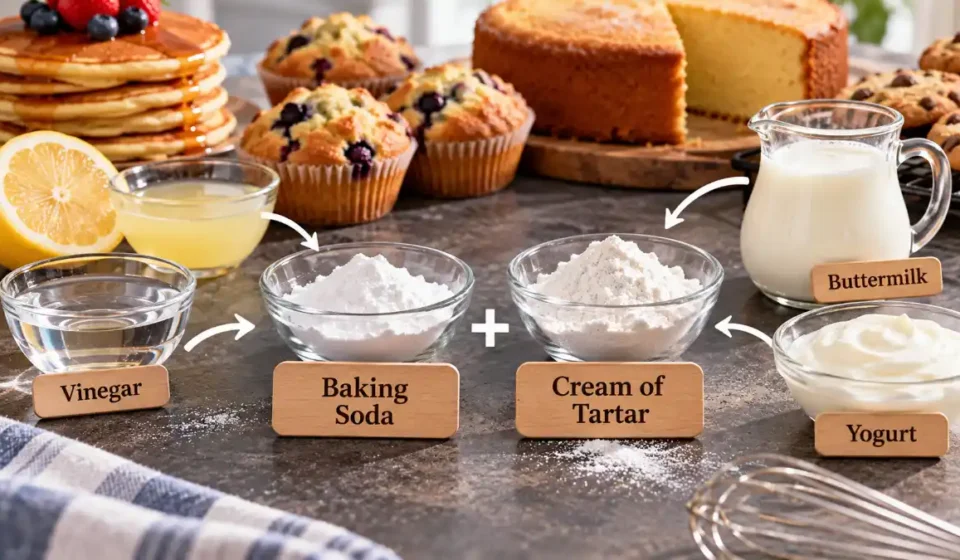

The best baking powder substitute is ¼ teaspoon of baking soda mixed with ½ teaspoon of cream of tartar for every 1 teaspoon of baking powder your recipe calls for. Together, these ingredients create the reaction needed to help baked goods rise. If you’re out of cream of tartar, you can also combine baking soda with lemon juice, white vinegar, buttermilk, or plain yogurt. Just remember that some alternatives require adjusting the liquid in your recipe.
The cream of tartar mixture is a dependable option for cakes, cookies, muffins, pancakes, biscuits, and quick breads because it doesn’t add extra moisture or noticeable flavor. Still, homemade substitutes may produce a slightly different rise or texture than commercial double-acting baking powder.
Best Substitute for Baking Powder
Combining baking soda with cream of tartar is one of the easiest ways to replace baking powder without changing your recipe’s balance of wet and dry ingredients.
For every 1 teaspoon of baking powder, use:
- ¼ teaspoon baking soda
- ½ teaspoon cream of tartar
- ¼ teaspoon cornstarch (optional)
Mix these ingredients thoroughly before adding them to your recipe. Cornstarch helps keep the dry ingredients from reacting with moisture during storage, but you don’t need it if you’re using the mixture right away. This is also the combination recommended in a baking powder substitution guide.
Here’s why it works: cream of tartar is acidic, while baking soda is alkaline. When they come into contact with moisture, they react and release carbon dioxide. The resulting gas bubbles help the batter expand and rise as it bakes.
Unlike most commercial double-acting baking powders, this homemade mixture starts reacting as soon as it gets wet. Once you’ve combined your ingredients, avoid unnecessary delays unless the recipe specifically calls for a resting period.
Baking Powder Substitute Measurement Chart
Not every recipe calls for the same amount of baking powder. Use this chart to measure the right combination of baking soda and cream of tartar.
| Baking Powder Needed | Baking Soda | Cream of Tartar |
| ½ teaspoon | ⅛ teaspoon | ¼ teaspoon |
| 1 teaspoon | ¼ teaspoon | ½ teaspoon |
| 2 teaspoons | ½ teaspoon | 1 teaspoon |
| 1 tablespoon (3 teaspoons) | ¾ teaspoon | 1½ teaspoons |
The chart doesn’t include optional cornstarch. If your recipe needs more than the amounts shown, increase both ingredients proportionally.
Accurate measurements matter, particularly with baking soda. Using too much can leave an unpleasant alkaline or soapy taste, even if the baked goods rise properly.
Other Baking Powder Substitutes Without Cream of Tartar
No cream of tartar in the pantry? You may already have another acidic ingredient that can do the job. Lemon juice, vinegar, buttermilk, and yogurt can all react with baking soda, although they aren’t equally suitable for every recipe.
Your choice should depend on the flavor you’re aiming for, the amount of liquid already in the recipe, and the texture you want to achieve.
1. Baking Soda and Lemon Juice
For every 1 teaspoon of baking powder, try:
- ¼ teaspoon baking soda
- ½ teaspoon lemon juice
Stir the baking soda into your dry ingredients and add the lemon juice to the wet mixture. Combine everything when you’re ready to bake.
This option works particularly well in muffins, cakes, and pancakes where a faint citrus flavor won’t seem out of place. Because the acidity of lemon juice can vary, the finished bake may not rise quite as much as it would with regular baking powder.
2. Baking Soda and White Vinegar
Another substitute for baking powder uses:
- ¼ teaspoon baking soda
- ½ teaspoon white vinegar
White vinegar provides the acidity needed to activate baking soda without adding a citrus note. The small amount usually won’t make much difference to batter consistency, though delicate recipes may pick up a slight vinegar flavor.
Add the vinegar to your wet ingredients and the baking soda to the dry ones. Once mixed, try not to leave the batter sitting longer than necessary.
Both lemon juice and white vinegar are recognized alternatives for replacing baking powder, but they’re most practical when a recipe needs only a small amount.
3. Baking Soda and Buttermilk
For every 1 teaspoon of baking powder, you can use:
- ¼ teaspoon baking soda
- ½ cup buttermilk
The natural acidity in buttermilk reacts with baking soda, making this combination especially useful for pancakes, muffins, biscuits, and quick breads.
The catch is the extra liquid. If your recipe already includes milk or water, replace ½ cup of that liquid with buttermilk instead of simply adding more. Otherwise, your batter may become too thin or your dough too sticky.
This substitution is also documented in Utah State University’s ingredient substitution guidance.
Buttermilk works best when the recipe contains enough liquid to make that adjustment. Its acidity can vary between products, so the final texture and rise may differ slightly from the original.
4. Baking Soda and Plain Yogurt
Plain, unsweetened yogurt offers another way to activate baking soda. Its lactic acid helps produce the gas bubbles that make baked goods rise, but there’s no single replacement ratio that works reliably in every recipe.
If your recipe already contains yogurt or a suitable dairy liquid, ¼ teaspoon of baking soda with approximately ½ cup of plain yogurt may serve as a starting point for replacing 1 teaspoon of baking powder. This isn’t an exact substitution, though. The right amount depends on the yogurt’s acidity, thickness, and the other ingredients.
If you’re using thick yogurt, a little milk or water may help bring the batter back to the intended consistency. Plain yogurt is usually the better choice, since sweetened or flavored varieties can affect both taste and sweetness.
Yogurt is also commonly used in baking ingredient substitutions, especially when the recipe’s liquid content can be adjusted.
Which Baking Powder Substitute Works Best for Different Recipes?
The most suitable substitute depends on what you’re baking. A light cake has different requirements from a batch of pancakes, and adding an acidic liquid can change more than just the rise.
| Recipe | Recommended Substitute | What to Consider |
| Cakes | Baking soda + cream of tartar | Doesn’t introduce extra moisture or unwanted flavors |
| Cookies | Baking soda + cream of tartar | Maintains dough consistency, although spreading and texture may change |
| Muffins | Cream of tartar mixture or buttermilk | Buttermilk works when you can adjust the other liquids |
| Pancakes | Buttermilk + baking soda | Suits fluid batters and adds a mild tang |
| Biscuits | Cream of tartar mixture or buttermilk | Extra liquid must be balanced to keep the dough workable |
| Quick breads | Cream of tartar mixture or acidic dairy | Choose according to the recipe’s moisture and acidity |
For delicate cakes and cookies, the dry cream of tartar mixture is usually the simpler choice. It replaces the leavening without altering how much liquid goes into the batter or dough.
Pancakes, muffins, and quick breads generally offer more flexibility. Buttermilk or yogurt may work well in these recipes, particularly if they already contain similar ingredients.
Common Mistakes When Replacing Baking Powder
Using baking soda alone: Baking soda isn’t a direct replacement for baking powder. It needs sufficient acid to produce the carbon dioxide that helps baked goods rise. Without it, the results may be dense or have an unpleasant taste. Understanding the difference between baking soda and baking powder helps explain why the two aren’t interchangeable.
Adding too much baking soda: Extra baking soda doesn’t guarantee a higher rise. Instead, it can affect the color, texture, and flavor of your baked goods. Stick to the recommended measurements rather than adding more for extra lift.
Ignoring liquid adjustments: Adding ½ cup of buttermilk or yogurt without reducing another liquid can throw off your recipe’s consistency. The batter may become runny, or the dough may turn too sticky to handle properly.
Leaving the batter sitting unnecessarily: Once baking soda meets an acidic liquid, the reaction begins. Letting the mixture stand for too long can allow some of the gas to escape before baking. Follow any intentional resting instructions in your recipe, but avoid delays that aren’t necessary.
Expecting identical results: Most commercial double-acting baking powders release gas during mixing and again when heated. Homemade substitutes behave differently, which can affect the finished rise and texture. A substitution can work well without producing the same result.
Read also: Baking Powder Substitute
Frequently Asked Questions
Can I make a baking powder substitute ahead of time?
Yes. You can combine baking soda and cream of tartar ahead of time, adding cornstarch to help protect the dry mixture from moisture. Store it in an airtight container in a cool, dry place. Homemade mixtures can lose effectiveness if exposed to humidity, so preparing a fresh batch when you need it is usually the more dependable option.
Can I replace baking powder if my recipe already contains baking soda?
Yes, but check what else is in the recipe first. Ingredients such as buttermilk, yogurt, lemon juice, and vinegar may already provide acidity for the existing baking soda. Adding another substitute without accounting for that balance could change the flavor or prevent the batter from rising as expected. The measured baking soda and cream of tartar combination is often easier to manage, but you’ll still need to consider how it fits with the recipe’s other ingredients.