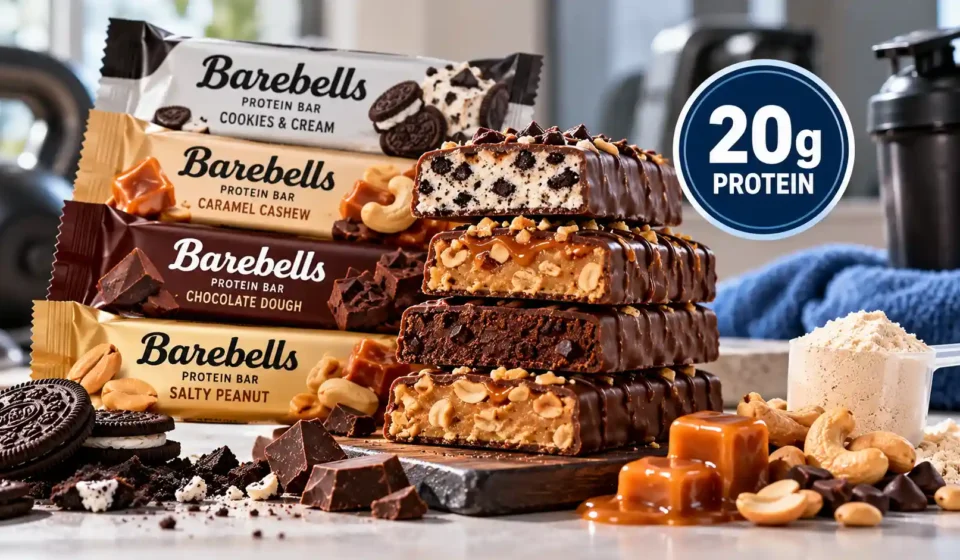

Barbell protein bars are a common search term for Barebells protein bars, high-protein snacks known for their dessert-inspired flavors and no-added-sugar formulations. A standard Barebells Original Protein Bar contains 20 grams of protein per 55-gram bar, while Soft Protein Bars provide 16 grams and Vegan Protein Bars provide 15 grams. They’re a convenient way to increase your daily protein intake, although calories, carbohydrates, ingredients, and allergens vary by product and flavor.
Barebells bars are particularly appealing if you enjoy chocolate-coated snacks but also want a substantial amount of protein. Popular U.S. flavors include Cookies & Cream, Caramel Cashew, Salty Peanut, and Chocolate Dough. Before buying, though, it’s worth looking beyond the flavors. The nutritional content, sweeteners, dietary restrictions, and price all matter when deciding whether these bars are right for you.
What Are Barbell Protein Bars?
Barebells is a protein snack brand whose bars are designed to resemble candy bars in taste and texture. Many feature protein-rich fillings, smooth chocolate coatings, caramel layers, or crunchy pieces that make them different from traditional protein bars.
The brand offers three main protein bar varieties:
- Original Protein Bars: Generally provide 20 grams of protein per 55-gram bar. These typically feature layered fillings, chocolate coatings, and dessert-inspired flavors.
- Soft Protein Bars: Contain 16 grams of protein per 55-gram bar, with a softer center and chocolate coating.
- Vegan Protein Bars: Supply 15 grams of plant-based protein per 55-gram bar, using sources such as soy, pea, and rice protein.
According to the Barebells nutritional information, these ranges contain no added sugar, although their individual nutritional profiles differ. Ingredients, serving sizes, and availability can also vary between markets.
For U.S. shoppers, standard Original Protein Bars are a good starting point because they deliver more protein per bar than the Soft and Vegan varieties described above.
Barebells Protein Bars Nutrition and Ingredients
Most standard Barebells Original bars contain 20 grams of protein per 55-gram serving. However, calories, carbohydrates, fat, and sugar alcohol content aren’t identical across flavors.
Here’s how two popular Original Protein Bars compare using their U.S. nutrition labels.
| Nutrition per 55 g bar | Cookies & Cream | Caramel Cashew |
| Calories | 200 | 200 |
| Protein | 20 g | 20 g |
| Total carbohydrates | 20 g | 18 g |
| Total sugars | 1 g | 1 g |
| Added sugars | 0 g | 0 g |
| Sugar alcohols | 5 g | 5 g |
| Total fat | 7 g | 8 g |
| Saturated fat | 3 g | 3.5 g |
Both flavors deliver the same amount of protein and calories, but their carbohydrate and fat content differs slightly. You can compare the full ingredients and nutritional details for Cookies & Cream and Caramel Cashew before choosing between them.
Barebells Original bars commonly contain milk-derived proteins, including calcium caseinate, whey protein concentrate, and whey protein isolate. Some formulations also include bovine collagen hydrolysate.
These ingredients contribute to the overall protein content, but they’re not nutritionally identical. Collagen, for example, doesn’t provide the same essential amino acid profile as whey or milk protein. If you’re comparing different protein sources, understanding how collagen-based supplements differ from conventional protein products can help you make a more informed choice.
Certain Barebells flavors use maltitol and sucralose for sweetness. Maltitol is a sugar alcohol, while sucralose is a high-intensity sweetener.
One important distinction: no added sugar doesn’t mean sugar-free, carbohydrate-free, or calorie-free. The Nutrition Facts label still matters, especially if you’re monitoring carbohydrates, calories, or saturated fat.
Are Barebells Protein Bars Healthy?
Barebells protein bars can fit into a balanced diet, particularly when you need a convenient source of protein between meals or after a workout.
As explained in the NIH guidance on protein and exercise, adequate dietary protein helps maintain and repair muscle tissue. That makes protein-rich snacks useful for some active adults, although bars aren’t essential for muscle growth and shouldn’t routinely replace balanced meals.
There are a few dietary considerations worth keeping in mind.
Some people experience bloating, gas, or digestive discomfort after consuming sugar alcohols such as maltitol. The FDA’s guidance on sugar alcohols explains that these ingredients aren’t completely absorbed by the body and may cause digestive symptoms, particularly when consumed in larger quantities.
Original and Soft bars also contain dairy-derived ingredients, making them unsuitable for vegans. Depending on the flavor, bars may contain peanuts, tree nuts, or soy, and some carry allergen cross-contact warnings. They can also contain lactose or traces of lactose.
If you have food allergies, lactose intolerance, or specific dietary requirements, check the individual product label rather than assuming all Barebells bars have the same ingredients. Vegan varieties avoid dairy-based protein ingredients, but their allergen information still needs checking.
Barebells Protein Bar Flavors: Which Should You Choose?
Barebells offers several flavors inspired by familiar chocolate treats and desserts. While they share a similar candy-bar approach, their fillings, sweetness, coatings, and crunchy ingredients give each one a different character.
Four recognizable U.S. Original flavors include:
1. Cookies & Cream
Cookies & Cream pairs a creamy, cookie-inspired filling with crunchy cookie pieces and a chocolate coating. It’s worth considering if you like a combination of smooth and crunchy textures without a prominent nut flavor.
2. Caramel Cashew
Caramel Cashew has a caramel center with cashew pieces. The chewy filling and nutty elements make it an appealing option for people who enjoy caramel-and-nut chocolate bars.
3. Salty Peanut
Salty Peanut combines chocolate sweetness with a salty peanut flavor. If sweet-and-salty snacks are your preference, this could be a good match. However, it’s unsuitable for anyone with a peanut allergy.
4. Chocolate Dough
Chocolate Dough focuses on chocolate flavor, with a dough-inspired center and contrasting coating textures. It’s a flavor to consider if you prefer chocolate-heavy snacks rather than caramel or peanut combinations.
There’s no universally best Barebells flavor because taste preferences vary. If you’re buying for the first time, a variety pack makes more sense than committing to twelve bars of a flavor you haven’t tried.
Barebells Protein Bars Price and Where to Buy
Barebells protein bars generally cost more than everyday packaged snacks, so comparing the price per bar is useful before buying a full box.
As of October 24, 2026, standard Original Protein Bar 12-packs are listed at approximately $30.99 in the official U.S. store. The 12-bar Classics Variety Pack, containing Cookies & Cream, Caramel Cashew, Salty Peanut, and Chocolate Dough, is listed at $31.99.
That works out to approximately $2.58 per bar for a standard Original 12-pack and $2.67 per bar for the variety pack.
With 20 grams of protein in each bar, you’re getting roughly 7.7 grams of protein per dollar with the single-flavor box, compared with 7.5 grams per dollar for the variety pack.
The difference is small, but it gives regular buyers a reason to stick with their favorite flavor. First-time shoppers may find the variety pack worth the slightly higher price because it lets them sample different options.
Barebells bars are sold through the official U.S. store and selected online and physical retailers. Prices, promotions, stock, and available flavors depend on the seller.
Before ordering, compare the total price, shipping charges, package size, and protein content. A discounted box isn’t necessarily the best deal if delivery costs erase the savings.
Are Barebells Protein Bars Worth Buying?
Barebells protein bars are worth considering if you want a convenient, chocolate-style snack that provides substantial protein without added sugar. Original bars deliver 20 grams of protein per serving, making them useful when it’s difficult to fit enough protein into your regular meals and snacks.
They’re especially appealing for people who prioritize portability and dessert-inspired flavors. Still, their relatively high price, dairy ingredients, potential allergens, and sugar alcohol content mean they won’t suit everyone.
If keeping protein costs low is your main priority, foods such as Greek yogurt and eggs may offer better value. You could also compare the cost and protein content of Ascent Protein if you’re considering protein powders rather than ready-to-eat bars. Powders and bars serve different purposes, so convenience should factor into the comparison.
For first-time buyers, an Original variety pack is a sensible way to explore the flavors. Once you’ve found one you enjoy, a standard single-flavor box may save you a little money at the listed prices.
Ultimately, Barebells bars are best treated as an optional protein-rich snack within a varied diet, not an essential fitness supplement or substitute for balanced meals.
Frequently Asked Questions
Are Barebells protein bars gluten-free?
Not necessarily. Barebells advises that its bars may contain traces of gluten. Ingredients and allergen warnings can differ between flavors, so check the packaging carefully. If you have celiac disease or must strictly avoid gluten, don’t assume a bar is gluten-free unless its labeling provides suitable assurance.
Can you eat Barebells protein bars every day?
For many healthy adults, eating a Barebells protein bar daily can fit into a balanced diet, provided it suits their nutritional needs and they tolerate the ingredients. Consider the calories, saturated fat, sugar alcohols, and your overall protein intake. It’s also important to eat a variety of foods rather than relying on protein bars as your main protein source.