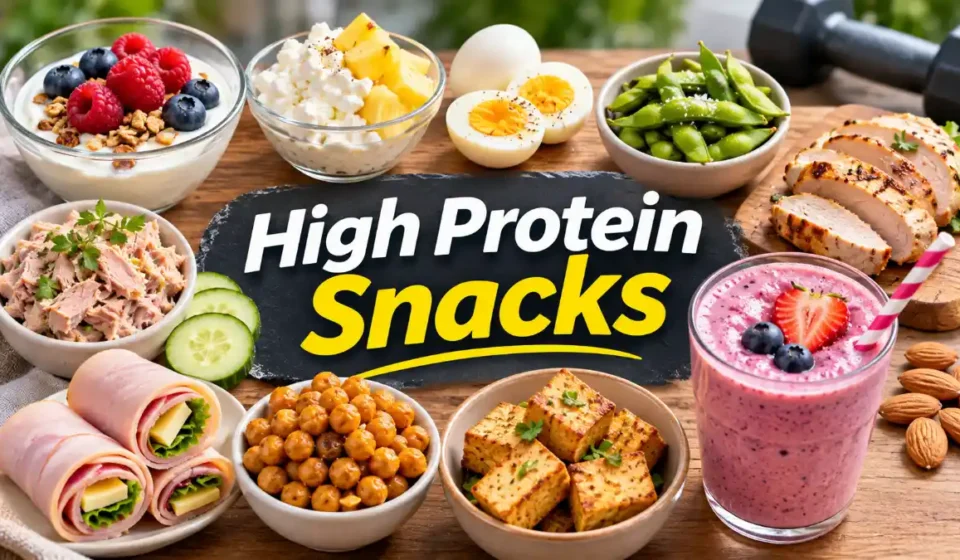

The best high-protein snacks include Greek yogurt, cottage cheese, hard-boiled eggs, edamame, tuna, turkey roll-ups, tofu, roasted chickpeas, and protein-rich smoothies. Many provide around 10–20 grams of protein per serving, while foods like chicken and tuna can deliver even more. Whether you’re looking for something quick at work, a post-workout snack, or a filling afternoon bite, there are plenty of nutritious options that take little effort to prepare.
Protein isn’t the only thing worth considering, though. Calories, portion sizes, fiber, and convenience all play a role. Plain Greek yogurt, for instance, provides plenty of protein without many calories. Nuts and seeds offer healthy fats and other nutrients, but generally contain less protein per calorie. Comparing these differences can help you choose snacks that fit your appetite, schedule, and nutritional goals.
25 High Protein Snacks Compared
These 25 snack ideas cover dairy, eggs, seafood, meat, plant-based foods, homemade combinations, and ready-to-eat products. Nutritional figures are approximate and depend on the ingredients and portions used. For individual foods, the USDA FoodData Central database provides detailed nutrient information.
| High protein snack | Serving size | Protein | Calories | Prep time | Cooking required? |
| Greek yogurt with berries | 170 g nonfat yogurt + ½ cup berries | 18 g | 135 | 2 min | No |
| Cottage cheese with pineapple | ½ cup low-fat cottage cheese + ½ cup pineapple | 13 g | 145 | 2 min | No |
| Hard-boiled eggs | 2 large eggs | 13 g | 155 | 12–15 min | Yes |
| Egg-white muffins | 4 egg whites + ¼ cup spinach | 15 g | 70 | 20–25 min | Yes |
| String cheese | 2 part-skim mozzarella sticks | 14 g | 160 | Ready to eat | No |
| Plain nonfat skyr | 170 g | 16–18 g | 100–120 | Ready to eat | No |
| Tuna cucumber bites | 3 oz drained light tuna + ½ cup cucumber | 22 g | 110 | 5 min | No |
| Turkey and cheese roll-ups | 3 oz sliced turkey + 1 cheese slice | 23 g | 160 | 3 min | No |
| Chicken breast bites | 3 oz cooked skinless chicken breast | 26 g | 140 | 5 min* | Yes* |
| Salmon with crackers | 3 oz canned salmon + 4 whole-grain crackers | 20 g | 195 | 3 min | No |
| Turkey jerky | 1 oz | 10–12 g | 70–100 | Ready to eat | No |
| Seasoned edamame | 1 cup cooked, shelled | 18 g | 190 | 5 min* | Yes* |
| Roasted chickpeas | ½ cup cooked chickpeas + 1 tsp olive oil | 7 g | 175 | 30–35 min | Yes |
| Baked tofu bites | 150 g firm tofu | 12–20 g | 120–220 | 25–30 min | Yes |
| Tempeh strips | 3 oz tempeh | 17 g | 165 | 10–15 min | Yes |
| Roasted lentils | ½ cup cooked lentils + 1 tsp oil | 9 g | 155 | 30–35 min | Yes |
| Hummus with whole-grain pita | ¼ cup hummus + ½ medium pita | 7 g | 210 | 2 min | No |
| Pumpkin seeds | 1 oz shelled seeds | 9 g | 160 | Ready to eat | No |
| Almonds | 1 oz, about 23 almonds | 6 g | 165 | Ready to eat | No |
| Greek yogurt protein smoothie | 170 g nonfat yogurt + 1 cup skim milk + ½ banana | 26 g | 235 | 5 min | No |
| Peanut butter toast | 1 whole-wheat slice + 2 tbsp peanut butter | 12 g | 285 | 3 min | No |
| Overnight oats with yogurt | ¼ cup dry oats + ½ cup nonfat Greek yogurt + ¼ cup skim milk | 16 g | 160 | 5 min + chilling | No |
| Homemade peanut butter protein balls | 2 small balls from the recipe below | 5 g | 145 | 10 min + chilling | No |
| Protein bar | 1 bar | 10–20 g | 180–250 | Ready to eat | No |
| Ready-to-drink protein shake | 1 bottle | 20–30 g | 150–250 | Ready to drink | No |
These are rounded estimates, not guaranteed product-label values. Actual nutrition varies with ingredients, brands, cooking methods, and portion sizes. Preparation times include assembly and active cooking where applicable, but exclude oven preheating and cooling. Chicken and edamame take about five minutes when already cooked; starting with raw or frozen ingredients may take longer.
Not every food on the list is equally rich in protein. Almonds, hummus, chickpeas, and peanut butter snacks provide more modest amounts, but they’re still worthwhile for their fiber, healthy fats, and other nutrients.
Easy Homemade High Protein Snacks
Making healthy high-protein snacks doesn’t have to involve complicated recipes. Most of these ideas use everyday groceries, and several can be assembled in five minutes or less.
No-Cook Snacks Ready in 5 Minutes
1. Greek yogurt with berries
Spoon 170 g plain nonfat Greek yogurt into a bowl and top with ½ cup blueberries or sliced strawberries. Sprinkle with cinnamon if you like. You’ll get approximately 18 g protein and 135 calories.
2. Cottage cheese with fruit
Combine ½ cup low-fat cottage cheese with ½ cup pineapple chunks for a quick, creamy snack. If you’re using canned pineapple, choose fruit packed in juice instead of syrup. This combination provides roughly 13 g protein and 145 calories.
3. Tuna cucumber bites
Drain 3 oz canned light tuna and spoon it onto ½ cup sliced cucumber. A squeeze of lemon, freshly ground pepper, or chopped herbs adds flavor without much extra preparation. One serving contains approximately 22 g protein and 110 calories.
4. Turkey and cheese roll-ups
Place one cheese slice over 3 oz sliced turkey, roll everything together, and serve with lettuce or cucumber if you’d like something crunchy. The roll-ups alone deliver around 23 g protein and 160 calories, although the exact numbers depend on your turkey and cheese.
Make-Ahead Snacks and Simple Recipes
5. Egg-white muffins
Whisk four large egg whites with ¼ cup chopped spinach, then divide the mixture between two lightly greased muffin cups. Bake at 350°F for about 15–20 minutes, until the centers reach 160°F. Both muffins together provide approximately 15 g protein and 70 calories before added oil. Allow additional time to preheat the oven.
For safe preparation, the FDA recommends cooking egg dishes to an internal temperature of 160°F.
6. Crispy roasted chickpeas
Pat ½ cup cooked chickpeas dry, then toss them with 1 teaspoon olive oil and a pinch of paprika. Spread them on a baking sheet and roast at 400°F for about 25–30 minutes, stirring occasionally, until crisp. The finished snack contains roughly 7 g protein and 175 calories.
7. Seasoned edamame
Warm 1 cup cooked, shelled edamame and toss it with lemon juice, garlic powder, and chili flakes. Starting with precooked edamame keeps preparation to about five minutes. You’ll get approximately 18 g protein and 190 calories.
8. Baked tofu bites
Cut 150 g firm tofu into bite-sized cubes and season with garlic, paprika, and black pepper. Arrange the pieces on a baking sheet and bake at 400°F for 20–25 minutes, turning halfway through. Depending on the tofu, this provides approximately 12–20 g protein and 120–220 calories before adding oil.
9. Greek yogurt protein smoothie
Blend 170 g plain nonfat Greek yogurt with 1 cup skim milk and half a medium banana until smooth. It’s ready in about five minutes and delivers approximately 26 g protein and 235 calories without requiring protein powder.
10. Homemade peanut butter protein balls
Stir together ½ cup dry rolled oats, 4 tablespoons peanut butter, and 2 teaspoons honey. Shape the mixture into eight small balls and refrigerate until firm. Two balls provide roughly 5 g protein and 145 calories.
These are better considered a moderate-protein snack than a concentrated protein source, but they’re convenient to prepare ahead of time.
Best High Protein Snacks for Different Goals
High Protein Low Calorie Snacks
If you’re looking for substantial protein without many calories, nonfat Greek yogurt, tuna, egg whites, low-fat cottage cheese, and skinless chicken breast are good places to start.
These foods generally provide more protein per calorie than nuts, seeds, and peanut butter. That doesn’t make higher-calorie snacks unhealthy. Almonds and pumpkin seeds, for example, also contain unsaturated fats, minerals, and other valuable nutrients. What matters most is choosing portions that suit your needs.
High Protein Snacks for Weight Loss and Muscle Gain
For weight management, protein-rich snacks can help satisfy hunger between meals. Combining protein with fiber-rich fruit, vegetables, or whole grains may make a snack even more filling. Still, no particular snack causes weight loss on its own. Your overall eating pattern and energy intake matter more.
When muscle gain is the goal, snacks offer another opportunity to meet your daily protein needs alongside resistance training and adequate calorie intake. According to the NIH’s exercise and athletic performance guidance, athletes may need approximately 1.2–2.0 grams of protein per kilogram of body weight each day, depending on their activity and training demands.
A snack containing 10–20 grams of protein can be a useful choice for some adults, but it isn’t a requirement for everyone. After exercise, options like Greek yogurt with fruit, a chicken sandwich, or a protein-rich smoothie can supply protein along with carbohydrates.
Vegetarian, Vegan, and Budget-Friendly Options
Vegetarians have plenty of choices, including Greek yogurt, cottage cheese, eggs, and string cheese. For vegan snacks, try edamame, tofu, tempeh, chickpeas, lentils, or pumpkin seeds.
Eating more protein doesn’t necessarily mean spending more, either. Eggs, dried beans, canned legumes, plain yogurt, and larger containers of cottage cheese can be practical everyday purchases.
If you avoid lactose, lactose-free dairy products may offer similar protein benefits. Eggs and plain edamame are naturally gluten-free, although anyone with food allergies or celiac disease should still check ingredient labels and potential cross-contact warnings.
How to Choose and Meal Prep High Protein Snacks
When shopping for packaged snacks, look beyond the word protein printed on the front. Check the Nutrition Facts label for protein per serving, calories, fiber, added sugars, saturated fat, and sodium. It’s also worth checking how many servings the package contains. The FDA’s serving-size guidance explains why the listed serving isn’t necessarily the amount you should eat.
Protein bars and shakes are useful when you’re traveling, working, or short on preparation time, but they aren’t automatically healthier than whole foods. Compare similar serving sizes, since larger bars may contain more protein simply because they contain more food and calories. If you’re considering packaged options, comparisons of BUILT protein bars and Barebells protein bars can help you understand differences in ingredients and nutrition.
Ready-to-drink products are another convenient choice. Options such as Core Power protein shakes and Chobani protein drinks offer different protein amounts, serving sizes, and formulations. Check the specific product label rather than assuming every flavor or variety has the same nutritional content.
For meal prep, cook eggs, chicken, tofu, or legumes in batches and divide them into portions you can grab during the week. Keep perishable snacks refrigerated at 40°F or below. Hard-boiled eggs generally last up to one week in the refrigerator, while many cooked leftovers should be eaten within three to four days, as outlined in the food storage guidelines.
If you’re taking dairy, eggs, meat, or other perishable snacks to work or school, use an insulated lunch bag with ice packs. Food shouldn’t remain unrefrigerated for more than two hours, or one hour when temperatures are above 90°F. These limits follow standard food safety recommendations.
A Simple One-Day High Protein Snack Example
You don’t need an elaborate snack schedule. For example, a typical day could include:
- Morning: 170 g nonfat Greek yogurt with ½ cup berries — approximately 18 g protein and 135 calories.
- Afternoon: Two hard-boiled eggs — approximately 13 g protein and 155 calories.
Together, these provide about 31 g protein and 290 calories. They’re meant to complement regular meals, not replace them. Adjust portions according to your appetite, activity level, and nutritional needs.
If you have kidney disease, food allergies, or a medically prescribed diet, speak with a qualified healthcare professional before making substantial changes to your protein intake.
Frequently Asked Questions
What high protein snacks are good before bed?
Greek yogurt, cottage cheese, and tofu are convenient options when you’re hungry in the evening. They provide protein without requiring much preparation. There’s no need to eat a protein-rich snack before bed unless it fits your appetite, daily nutrition, or training goals.
What should I eat after a workout?
Greek yogurt with fruit, turkey and cheese roll-ups, or a milk-based smoothie can help you get protein after exercise. If you’ve completed a long or demanding workout, adding carbohydrates may also help replenish energy. Your overall daily protein intake matters more than eating within a rigid post-workout window.