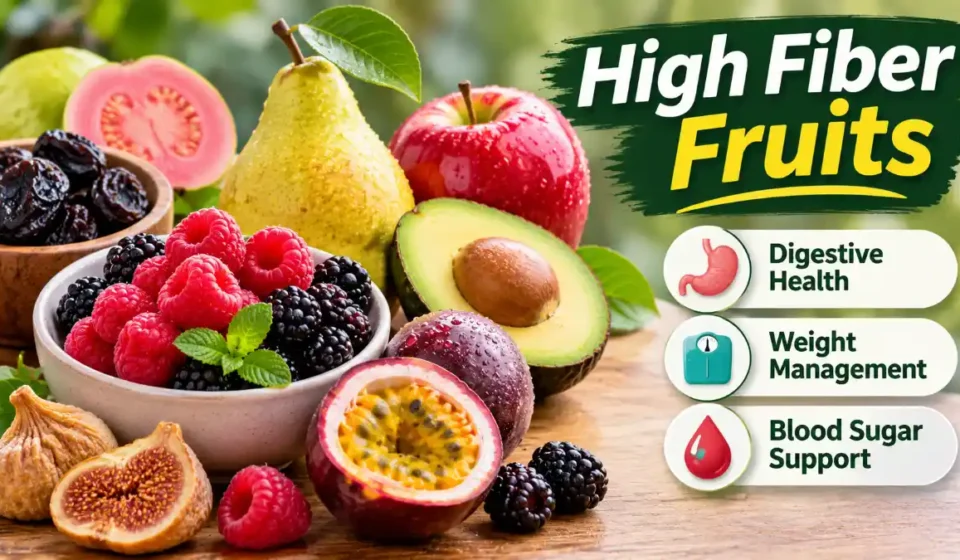

The best high-fiber fruits include raspberries, blackberries, passion fruit, avocado, guava, pears, and apples with their skins. One cup of raspberries provides approximately 8 grams of fiber, while a medium pear contains about 5.5 grams. Passion fruit is especially rich in fiber, with around 10.4 grams per 100 grams of edible pulp.
But the fruit with the most fiber per 100 grams isn’t necessarily the one that gives you the most fiber in a normal serving. For example, a cup of raspberries provides more fiber than a quarter-cup of passion fruit pulp. Looking at both measurements makes it easier to choose fruits that fit your eating habits.
18 High Fiber Fruits Ranked by Fiber Content
This high fiber fruits list compares 18 options using approximate nutritional values consistent with food composition data available through USDA FoodData Central. The fruits are ranked from highest to lowest fiber content per 100 grams of edible portion.
| Rank | Fruit | Fiber per 100 g | Typical serving (US/metric) | Fiber per serving |
| 1 | Passion fruit | 10.4 g | ¼ cup pulp (59 g) | 6.1 g |
| 2 | Dried figs | 9.8 g | 4 figs (34 g) | 3.3 g |
| 3 | Prunes (dried plums) | 7.1 g | 5 prunes (48 g) | 3.4 g |
| 4 | Avocado | 6.7 g | About ½ avocado (100 g flesh) | 6.7 g |
| 5 | Medjool dates | 6.7 g | 2 dates (48 g) | 3.2 g |
| 6 | Raspberries | 6.5 g | 1 cup (123 g) | 8.0 g |
| 7 | Guava | 5.4 g | 1 fruit (55 g) | 3.0 g |
| 8 | Blackberries | 5.3 g | 1 cup (144 g) | 7.6 g |
| 9 | Pomegranate arils | 4.0 g | ½ cup (87 g) | 3.5 g |
| 10 | Pear with skin | 3.1 g | 1 medium (178 g) | 5.5 g |
| 11 | Kiwi | 3.0 g | About 2 medium (138 g) | 4.1 g |
| 12 | Fresh figs | 2.9 g | 2 medium (100 g) | 2.9 g |
| 13 | Banana | 2.6 g | 1 medium (118 g) | 3.1 g |
| 14 | Apple with skin | 2.4 g | 1 medium (182 g) | 4.4 g |
| 15 | Blueberries | 2.4 g | 1 cup (148 g) | 3.6 g |
| 16 | Orange | 2.4 g | 1 medium (131 g) | 3.1 g |
| 17 | Strawberries | 2.0 g | 1 cup (152 g) | 3.0 g |
| 18 | Grapefruit | 1.6 g | ½ medium (about 123 g) | 2.0 g |
Values are approximate, rounded nutritional estimates. Serving weights refer to edible portions, and actual fiber amounts vary with fruit size, variety, and preparation. Dried fruits are listed separately from their fresh equivalents because removing water concentrates fiber, calories, and naturally occurring sugars by weight.
Passion fruit, dried figs, avocado, and berries stand out for their fiber concentration. Bananas, oranges, and grapefruit contain more modest amounts, but they still contribute to your daily intake.
For everyday eating, raspberries and blackberries are especially practical. Both provide substantial fiber in a familiar one-cup serving. The high-fiber foods chart also identifies berries, pears, and apples as useful sources.
Dried fruits offer plenty of fiber for their size, although smaller portions are generally more practical because their calories and carbohydrates are concentrated.
What Makes High Fiber Fruits Good for You?
Dietary fiber is a type of plant carbohydrate that passes through the small intestine without being fully digested. It helps maintain normal bowel function and supports digestive health.
There are two main types of dietary fiber:
- Soluble fiber absorbs water and can form a gel-like substance. Certain types help lower cholesterol and moderate blood glucose responses.
- Insoluble fiber adds bulk to stool and helps keep bowel movements regular.
Most fruits contain a mixture of both. Apples and pears provide pectin, a soluble fiber, while raspberries and blackberries contain fiber in their flesh and edible seeds.
Fruit offers more than fiber alone. Berries and guava provide vitamin C and beneficial plant compounds, bananas and avocados supply potassium, and many fresh fruits have a high water content.
Best High Fiber Fruits for Different Health Goals
For Constipation and Digestive Regularity
Prunes, pears, kiwi, and berries are good choices when you want to support more regular bowel movements.
Prunes contain fiber and sorbitol, a naturally occurring sugar alcohol with a mild laxative effect. Pears provide both fiber and water, while studies suggest that eating kiwi regularly may improve bowel frequency and digestive comfort in some people.
These benefits don’t mean fruit can resolve every case of constipation. Dietary guidance for constipation recommends increasing fiber gradually and drinking enough fluids to help it work effectively.
Persistent constipation, particularly when accompanied by abdominal pain, bleeding, or unexplained weight loss, should be evaluated by a healthcare professional.
For Weight Management
Raspberries, blackberries, pears, and apples can be useful in a weight-management diet because their fiber helps you feel satisfied after eating.
Whole fruits also require more chewing and generally contain more fiber than filtered fruit juices. Choosing an apple or a bowl of berries instead of a less-filling snack may help some people manage their overall calorie intake.
Still, no fruit directly burns fat or guarantees weight loss. Your overall eating pattern, activity level, and energy needs matter more than any single food.
For Blood Sugar Management
Having diabetes doesn’t mean you need to avoid fruit. Whole fruits can fit into a balanced eating plan, although portions and total carbohydrate intake are important.
Berries, apples, pears, and avocado are useful options. Their fiber is beneficial, but it doesn’t cancel out the carbohydrates they contain.
The American Diabetes Association’s fruit guidance recommends fresh, frozen, or canned fruit without added sugars. Dried fruit and juice can also fit into a diabetes eating plan, but their serving sizes are typically smaller.
Large smoothies and generous portions of dried fruit can provide substantial carbohydrates, so choose amounts that suit your nutritional needs and blood glucose goals.
How Much Fiber Do You Need Each Day?
The standard US Daily Value for dietary fiber is 28 grams per day, based on a 2,000-calorie diet. This is the reference amount used on nutrition labels, not an identical requirement for everyone.
Individual needs vary with age, sex, calorie intake, and health conditions. The FDA’s Daily Value guidance explains how fiber contributes to daily nutritional goals.
You can get a meaningful portion of that fiber from just two servings of fruit:
- Breakfast: One cup of raspberries provides approximately 8 grams of fiber.
- Afternoon snack: One medium pear with its skin provides about 5.5 grams.
Together, that’s approximately 13.5 grams of fiber, or 48% of the 28-gram Daily Value.
Vegetables, beans, lentils, nuts, and whole grains can provide the rest. You don’t need to get all your daily fiber from fruit.
Easy Ways to Eat More High-Fiber Fruits
You don’t need complicated recipes to eat more fiber-rich fruit. Small additions to meals you already enjoy can make a noticeable difference.
- Breakfast: Stir raspberries into oatmeal or add blackberries to plain Greek yogurt.
- Morning snack: Eat a whole pear or apple with its skin.
- Lunch: Add sliced avocado to a sandwich, salad, or grain bowl.
- Afternoon snack: Pair apple slices with unsweetened nut butter.
- Dessert: Have fresh berries with yogurt or a small serving of dried figs.
Berries pair particularly well with Greek yogurt, which adds protein to a fruit-based breakfast or snack.
Fresh fruit isn’t your only option, either. Unsweetened frozen fruit and canned varieties packed in water or their own juice can also contribute fiber. Choose portions that work with your appetite and overall nutritional needs.
Does Preparing Fruit Change Its Fiber Content?
Preparation can affect how much fiber you get from fruit, especially when parts of it are removed.
Eating apples and pears with their edible skins generally provides more fiber than peeling them. Blending whole fruit usually retains its fiber, provided you don’t strain out the pulp. Juicing that removes the pulp, however, can remove much of the fiber.
Freezing generally preserves fiber. Cooking may soften the fruit and change its texture, but it doesn’t necessarily remove most of the fiber. The nutritional values can still differ depending on whether the fruit is measured raw, cooked, or drained.
Drying removes water, making fiber, calories, and naturally occurring sugars more concentrated by weight. That’s why portion sizes deserve extra attention with dates, figs, and prunes.
If you’re increasing your fiber intake, do it gradually. A sudden increase can cause gas, bloating, or abdominal discomfort, especially if you aren’t drinking enough fluids. People with certain digestive conditions or prescribed low-fiber diets may need personalized dietary advice.
Frequently Asked Questions
Are frozen berries as high in fiber as fresh berries?
Yes, plain frozen berries generally provide similar amounts of fiber to fresh berries when compared by weight. Freezing doesn’t normally remove the fiber. Avoid assuming that sweetened frozen fruit products have the same overall nutritional profile, since added ingredients can change their sugar and calorie content.
Can eating too many high-fiber fruits cause digestive problems?
Yes. Eating considerably more fiber than your body is accustomed to can cause bloating, gas, cramps, or changes in bowel movements. Large portions of certain fruits may also cause discomfort because of their fructose or sorbitol content. Increase portions gradually and pay attention to how your digestive system responds.



[…] meals around lean protein, vegetables, whole grains, legumes, healthy fats, and fiber-rich fruits. Protein helps maintain muscle, while fiber can keep you feeling satisfied between […]