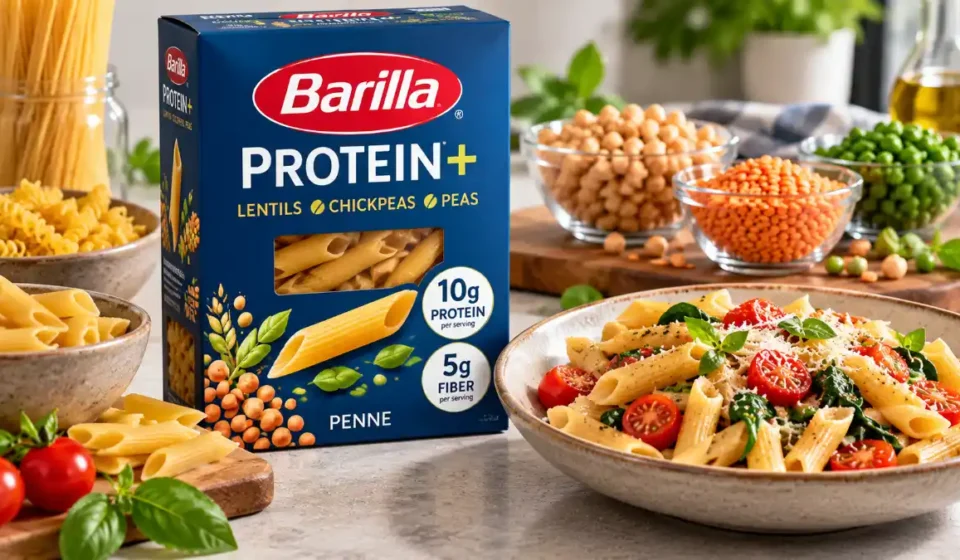

Barilla protein pasta, officially called Barilla Protein+, is a wheat-based pasta enriched with plant protein from lentils, chickpeas, and peas. A standard 2-ounce (56-gram) dry serving contains 190 calories, 10 grams of protein, and 5 grams of fiber. Compared with regular Barilla pasta, it provides more protein and fiber, with slightly fewer calories and carbohydrates. It’s a nutritious option for anyone looking to add more protein to everyday meals, although it isn’t gluten-free or low-carb.
Barilla Protein+ comes in familiar shapes, including spaghetti, penne, and rotini. Its biggest advantage is convenience: you get extra protein without switching to pasta made entirely from chickpeas or lentils. Whether it’s worth buying comes down to your nutritional needs, taste preferences, and grocery budget.
Barilla Protein Pasta Nutrition Facts
A standard dry serving of Barilla Protein+ delivers 10 grams of protein. The combination of wheat and legumes also adds fiber, giving it a slightly different nutritional profile from traditional semolina pasta.
Here’s how Barilla Protein+ spaghetti compares with regular Barilla semolina spaghetti using equivalent 2-ounce dry servings.
| Nutrient | Barilla Protein+ | Regular Barilla Pasta |
| Serving size (dry) | 2 oz (56 g) | 2 oz (56 g) |
| Calories | 190 | 200 |
| Protein | 10 g | 7 g |
| Total carbohydrates | 38 g | 42 g |
| Dietary fiber | 5 g | 3 g |
| Total fat | 1 g | 1 g |
| Total sugars | 2 g | 1 g |
These values reflect US product nutrition information. Formulations and labels can change, so check the package for the most accurate details.
The biggest nutritional advantage is the extra 3 grams of protein and 2 grams of fiber per serving. Protein+ also contains 4 grams fewer carbohydrates than regular spaghetti. That’s a relatively small difference, though, and its 38 grams of carbohydrates per serving still make it a carbohydrate-rich food.
You might also notice Barilla advertising 17 grams of protein per serving. That number isn’t incorrect, but it refers to a larger 3.5-ounce (approximately 100-gram) dry portion. The standard 2-ounce serving provides 10 grams, as explained in the company’s Protein+ nutrition and product information.
Barilla Protein Pasta Ingredients and Dietary Suitability
Barilla Protein+ combines traditional wheat ingredients with legumes rather than replacing wheat entirely. This helps increase its protein content while maintaining the familiar characteristics of conventional pasta.
Its main ingredients include:
- Semolina and durum wheat flour: Give the pasta its structure, firmness, and familiar texture.
- Lentil flour: Contributes plant-based protein and other nutrients.
- Chickpea flour: Adds protein and fiber.
- Pea protein: Boosts protein content without turning the product into an entirely legume-based pasta.
- Barley flour and spelt flour: Provide additional grain ingredients in the US formulation.
Barilla Protein+ is also enriched with vitamins and minerals, including iron and several B vitamins.
Is Barilla Protein Pasta Gluten-Free or Vegan?
Barilla Protein+ is not gluten-free. It contains wheat, barley, and spelt, all of which contain gluten. People with celiac disease or a wheat allergy should avoid it. For those with celiac disease, the National Institute of Diabetes and Digestive and Kidney Diseases explains why avoiding gluten-containing grains is essential.
The standard US formulation uses plant-based ingredients, making it suitable for many vegan diets. If you follow a strict vegan diet, it’s still worth checking the ingredient statement on the specific package.
Some people may experience gas or bloating when eating more legumes or fiber than they’re accustomed to. This doesn’t happen to everyone, but those with sensitive digestion may prefer starting with a smaller portion.
Barilla Protein+ also shouldn’t be confused with gluten-free chickpea or lentil pasta. Those products use different ingredient combinations, and their nutritional profiles can vary considerably. International versions of Barilla Protein+ may have different formulations as well.
Is Barilla Protein Pasta Healthier Than Regular Pasta?
Barilla Protein+ has some nutritional advantages over regular semolina pasta, particularly if you’re trying to eat more protein and fiber. However, that doesn’t automatically make it the healthier choice for everyone.
Higher protein intake: A 2-ounce dry serving provides 10 grams of protein, compared with approximately 7 grams in regular Barilla spaghetti. That extra protein can contribute to your daily intake, especially when the pasta is served with chicken, tofu, beans, or other protein-rich foods.
Additional fiber: With 5 grams per serving, Protein+ supplies more fiber than regular semolina spaghetti. Dietary fiber supports digestive health and can help meals feel more satisfying. The USDA’s Dietary Guidelines for Americans also emphasize the importance of nutritious, fiber-containing foods as part of a balanced eating pattern.
Weight management: Protein+ can fit into a weight-management plan, but eating it won’t automatically lead to weight loss. Portion sizes and the ingredients you add matter just as much. A generous serving covered in a calorie-dense sauce can still make for a substantial meal.
Fitness and muscle recovery: The extra protein can help you meet your daily protein requirements, which are important for maintaining and repairing muscle tissue. However, 10 grams of protein alone may not be enough for someone aiming to build a higher-protein meal after exercise.
If you’re managing blood sugar, pay attention to the total carbohydrate content. Although Protein+ contains more protein and fiber than regular pasta, that doesn’t guarantee a smaller blood-sugar response. Portion size, other foods in the meal, and individual factors all play a role.
Barilla Protein+ vs. Whole-Wheat and Chickpea Pasta
Whole-wheat pasta typically contains more whole-grain nutrients and fiber than refined semolina pasta. Depending on the brand, its fiber content may be comparable to Barilla Protein+, making it a good choice for people who prioritize whole grains.
Chickpea pasta often provides considerably more protein and fiber than conventional wheat pasta. Products made entirely from chickpeas may also be gluten-free, although shoppers should check the packaging for allergen and cross-contact information.
Barilla Protein+ falls somewhere between these options. It keeps a traditional wheat-based structure while adding protein from legumes. That makes it appealing if you want a modest nutritional upgrade without moving too far from the taste and texture of ordinary pasta.
Barilla Protein+ Pasta Shapes, Taste, and Cooking
Barilla Protein+ is available in several US pasta shapes, including spaghetti, thin spaghetti, angel hair, penne, rotini, elbows, farfalle, cellentani, rigatoni, and stars.
Cooking times vary depending on the shape. Protein+ spaghetti generally takes 7–9 minutes, while thin spaghetti cooks in approximately 5–7 minutes. For the best texture, follow the package directions and taste the pasta shortly before the recommended cooking time ends.
Because Protein+ contains durum wheat, it’s designed to cook and taste much like regular pasta. Barilla describes it as having a classic pasta flavor, although preferences differ. Some people may notice subtle differences in firmness or flavor because of the added legume ingredients.
You can use it in most recipes that call for conventional pasta. Tomato sauce, pesto, roasted vegetables, and olive oil-based sauces all work well. Adding vegetables and a protein source such as chicken, shrimp, or tofu can turn it into a more substantial meal.
Remember that pasta absorbs water as it cooks, increasing its weight and volume. According to Barilla’s dry and cooked pasta serving-size guide, a 2-ounce dry serving of Protein+ spaghetti yields approximately 1 cup cooked.
The protein becomes distributed throughout the larger cooked portion rather than increasing with the added water. Cooking doesn’t create extra protein, although small amounts of nutrients may be lost into the cooking water.
Barilla Protein Pasta Price and Where to Buy
Barilla Protein+ is available at US supermarkets, grocery stores, and online retailers. The selection varies by location, so some stores may carry spaghetti and penne without stocking every shape.
As of October 26, 2026, Target’s Barilla pasta listings showed a 14.5-ounce box of Protein+ spaghetti at approximately $2.99, or $0.21 per ounce. Regular Barilla spaghetti was listed at approximately $1.89 for a 16-ounce box, or $0.12 per ounce.
At those listed prices, Protein+ costs roughly $0.09 more per ounce. The difference can change with promotions, store location, and package size, so it’s worth checking the current shelf price before deciding.
Protein+ typically comes in 14.5-ounce boxes, while regular Barilla pasta is commonly sold in 16-ounce packages. Comparing price per ounce gives you a clearer picture of the value than looking at the box price alone.
Is Barilla Protein Pasta Worth Buying?
Barilla Protein+ is a sensible choice if you want to increase your protein and fiber intake while sticking with familiar wheat-based pasta.
Its main selling point is convenience. You get slightly more protein and fiber without having to change your favorite recipes or cooking routine. For families and everyday pasta eaters, that can be a useful advantage.
The higher price won’t necessarily make sense for everyone, though. Regular pasta paired with beans, vegetables, chicken, or another protein source can also be part of a nutritious meal.
If you need gluten-free pasta, want substantially fewer carbohydrates, or prefer whole-grain products, other varieties may be a better fit.
Overall, Barilla Protein+ offers a practical compromise between traditional semolina pasta and more specialized high-protein alternatives. It’s a worthwhile option for some diets, but not an essential upgrade for every shopper.
Read also: Barilla Protein Pasta
Frequently Asked Questions
Can you eat Barilla Protein+ pasta every day?
Yes, Barilla Protein+ can be eaten regularly as part of a balanced diet. The important considerations are portion size, overall dietary variety, and what you serve with it. Include vegetables and other protein sources, and vary your grains and meals rather than relying on one product for most of your nutrition.
Can you substitute Barilla Protein+ for regular pasta in any recipe?
You can use Barilla Protein+ in most recipes that call for regular pasta, including spaghetti dishes, pasta salads, and baked pasta. Choose a similar shape, measure the dry pasta by weight, and follow the Protein+ cooking instructions. The final texture may differ slightly, but most familiar sauces and preparations work well.
Does Barilla Protein+ pasta lose protein when cooked?
Cooking doesn’t eliminate most of the pasta’s protein, although small amounts of nutrients may enter the cooking water. The larger difference is water absorption: cooked pasta weighs more than dry pasta, so its protein concentration per 100 grams is lower. For accurate nutrition tracking, use the dry serving weight unless the label specifies otherwise.