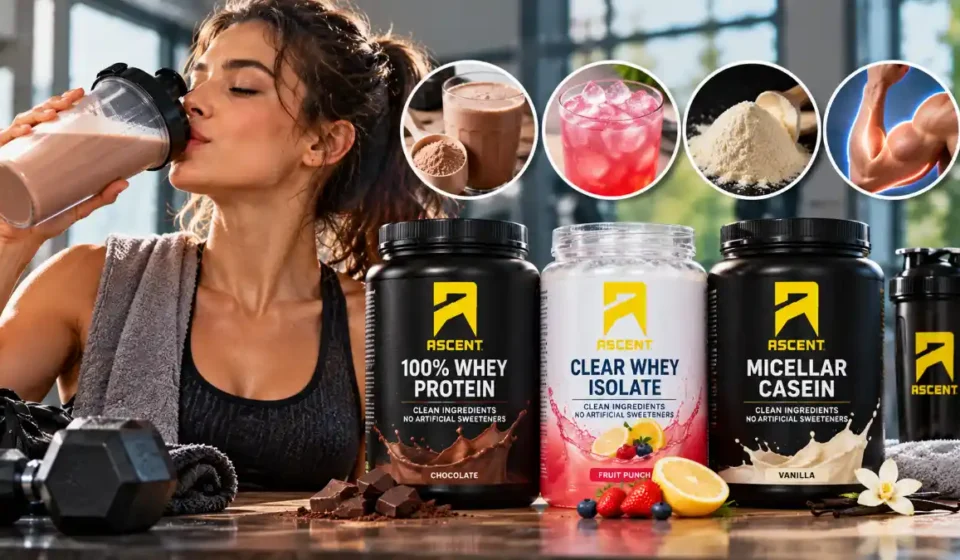

Ascent Protein is a sports nutrition brand that makes whey protein, clear whey isolate, and micellar casein powders to help people meet their daily protein needs, maintain muscle, and recover after exercise. Its standard whey protein delivers 25 grams of protein per serving without artificial flavors or sweeteners. For buyers who care about ingredient quality and third-party banned-substance testing, Ascent is worth considering. Whether it’s worth the price depends on the formula you choose, your budget, and your dietary needs.
Each Ascent protein powder serves a slightly different purpose. Traditional whey is convenient after a workout, clear whey offers a refreshing alternative to creamy shakes, and casein releases amino acids more gradually. The company has also sold plant-based protein, although its current availability is uncertain.
What Is Ascent Protein?
Ascent Protein is an American sports nutrition brand that focuses on protein powders with relatively simple ingredient lists. Its products appeal to athletes, regular gym-goers, and people who find it difficult to get enough protein from meals alone.
A notable feature of some Ascent products is their use of native whey protein isolate. Unlike conventional whey produced during cheesemaking, native whey is extracted directly from milk. However, this processing difference doesn’t mean Ascent will build more muscle than other high-quality whey proteins.
The brand also emphasizes third-party banned-substance testing and formulas without artificial flavors or sweeteners. These features are particularly relevant to competitive athletes and buyers who want to know exactly what their supplements contain.
Ascent Protein Products Compared
Ascent offers several protein formulations, each with different nutritional characteristics and uses.
| Product | Protein Per Serving | Main Characteristics | Best Suited For |
| 100% Whey Protein | 25g | Fast-digesting whey blend | Muscle recovery and everyday use |
| Clear Whey Isolate | 20g | Light, fruit-flavored protein drink | People who dislike creamy shakes |
| Micellar Casein | 25g | Slow-digesting dairy protein | Evening or between-meal protein |
| Plant Protein | Current formulation unverified | Plant-derived protein alternative | Dairy-free diets, if available |
100% Whey Protein
Ascent’s 100% Whey Protein combines native whey protein isolate, conventional whey protein isolate, and whey protein concentrate.
One serving of the chocolate formula contains 25 grams of protein and 120 calories. It also provides approximately 5.5 grams of branched-chain amino acids (BCAAs), including about 2.6 grams of leucine.
Because whey contains all nine essential amino acids, it’s a practical choice after exercise or whenever you need extra protein. You can drink it as a shake, blend it into a smoothie, or mix it into foods such as oatmeal.
Clear Whey Isolate
Ascent Clear Whey Isolate provides 20 grams of protein and approximately 100 calories per serving. Instead of producing a thick, milky shake, it mixes into a lighter, fruit-flavored drink.
That makes it appealing if you prefer something refreshing after exercise. Despite its different taste and texture, clear whey is still derived from milk, so it isn’t suitable for people with milk protein allergies.
Micellar Casein and Plant Protein
Ascent’s Micellar Casein supplies 25 grams of protein per serving. Unlike whey, casein digests more slowly, allowing amino acids to become available over a longer period.
You might prefer casein before bed or when you expect to go several hours without eating. It isn’t necessarily better than whey; the main difference is how quickly the protein is digested.
For people avoiding dairy, plant-based protein can be an alternative. Ascent has previously offered Plant Protein, but its availability in the current lineup hasn’t been confirmed. If you’re looking for a vegan supplement, check the latest product selection and ingredient list before ordering.
Ascent Protein Ingredients and Nutritional Value
Ascent’s nutrition information varies between products and flavors. The chocolate whey formula has the following nutritional values:
| Nutrient | Amount Per Serving |
| Serving Size | 33g |
| Calories | 120 |
| Protein | 25g |
| Total Carbohydrates | 4g |
| Total Sugar | 1g |
| Added Sugar | 0g |
| Total Fat | 1g |
Its ingredients include a whey protein isolate blend, whey protein concentrate, cocoa, natural flavors, lecithin, sea salt, and stevia leaf extract.
Ascent doesn’t use artificial sweeteners in this formula, but that doesn’t mean the powder is completely unsweetened. Stevia provides sweetness without added sugar.
Another selling point is third-party testing. Certain Ascent whey, clear whey, and casein products carry Informed Sport certification, which involves testing supplement batches for substances banned in competitive sports.
Certification applies to specific products and batches, so athletes should verify the status of the exact supplement they intend to use. It offers additional assurance about banned-substance testing, not a guarantee of better performance or complete freedom from risk.
Does Ascent Protein Help With Muscle Growth and Recovery?
Ascent Protein can support muscle growth and exercise recovery by making it easier to consume sufficient protein. Its whey formulas contain essential amino acids, including leucine, which helps stimulate muscle protein synthesis.
According to the International Society of Sports Nutrition’s position stand on protein and exercise, most healthy, physically active adults can support muscle maintenance and growth with approximately 1.4–2.0 grams of protein per kilogram of body weight daily.
For someone weighing 70 kilograms, that works out to roughly 98–140 grams per day. The appropriate amount depends on factors such as training intensity, overall nutrition, and individual goals.
One 25-gram serving of Ascent whey can make a meaningful contribution toward that daily target, especially when meals don’t provide enough protein.
Still, Ascent hasn’t been shown to produce better muscle-building results simply because of its brand or native whey processing. Consistent resistance training, adequate calories, and sufficient total daily protein matter much more.
If you already meet your protein requirements through regular food, there’s no need to add a protein powder just for the sake of using one.
Taste, Digestibility, and Potential Drawbacks
Ascent sells traditional whey flavors such as chocolate and vanilla, along with fruit-inspired clear whey options. Whether you’ll enjoy them is largely a matter of personal preference.
Standard whey creates a creamier drink, whereas clear whey has a lighter consistency. Mixability can also depend on how much liquid you use and how thoroughly you shake or blend the powder.
Before choosing a formula, consider these possible limitations:
- Milk allergies: Whey and casein come from milk and are unsuitable for anyone with a milk protein allergy.
- Lactose sensitivity: Whey concentrate contains lactose, while whey isolate typically contains less. Tolerance varies from person to person.
- Soy allergies: Some Ascent whey formulations contain soy-derived lecithin. Always check the label rather than assuming every flavor has identical ingredients.
- Pricing: Depending on the size and retailer, Ascent can cost more than some basic protein powders with comparable protein content.
People who have been advised to limit their protein intake because of a medical condition should consult a qualified healthcare professional before regularly using protein supplements.
Ascent Protein Price and Competitor Comparison
Ascent’s US prices depend on flavor, container size, retailer, and available promotions. Product listings checked in October 2026 showed chocolate whey protein starting at approximately $29.97, Clear Whey Isolate at $39.99, and Micellar Casein at $44.99.
These aren’t equivalent package sizes, so comparing the prices alone wouldn’t tell you which product offers better value.
For example, a $44.99 casein container with 28 servings costs approximately $1.61 per serving. To compare products fairly, you need to consider how much protein each serving provides.
Here’s how Ascent’s standard whey compares with two established alternatives:
| Protein Powder | Protein Per Serving | Key Difference |
| Ascent 100% Whey | 25g | Native whey isolate and whey concentrate blend |
| Optimum Nutrition Gold Standard Whey | 24g | Whey blend with isolate as the primary protein source |
| Dymatize ISO100 | 25g | Hydrolyzed whey protein isolate formulation |
All three provide complete protein and can help you meet your daily requirements. For example, Dymatize ISO100 uses hydrolyzed whey protein isolate, while Ascent combines native whey isolate with other whey proteins. The processing differences don’t establish that one will consistently produce better muscle growth.
When comparing prices, calculate the cost per 25 grams of protein rather than focusing on the container price. Then consider flavor, sweeteners, digestive tolerance, and whether the product has the testing credentials you need.
Is Ascent Protein Worth Buying?
Ascent Protein makes sense for buyers who want complete protein sources, clearly listed ingredients, and the added reassurance of banned-substance testing.
Its traditional whey is a versatile option for regular protein intake and post-workout recovery. Clear whey works well if you prefer a lighter drink, while micellar casein is worth considering when you want slower-digesting protein.
Price is the biggest deciding factor for many people. If your only goal is to meet your daily protein target, a cheaper whey powder with a comparable nutritional profile could work just as well. Anyone avoiding dairy should choose a clearly labeled plant-based product instead of assuming an Ascent formula is suitable.
Overall, Ascent offers credible nutritional benefits, but paying more is worthwhile only when its particular ingredients, certification credentials, or flavor options meet your preferences. You don’t need a premium-priced protein powder to build muscle effectively.
Read also: Ascent Protein
Frequently Asked Questions
Is Ascent Protein gluten-free?
Several Ascent protein products are marketed as certified gluten-free, including certain whey, clear whey, and casein formulations. However, certifications and ingredients can vary by product. If you have celiac disease or need to avoid gluten strictly, check the gluten-free certification and allergen information on the exact package before using it.
Can you mix Ascent Protein with water or milk?
Yes. Ascent’s traditional whey protein can be mixed with either water or milk. Water generally produces a lighter shake with fewer calories, while milk creates a creamier drink and adds protein and other nutrients. For clear whey isolate, water is the more suitable choice because the product is designed to make a light, refreshing beverage rather than a creamy shake.


[…] yogurt and eggs may offer better value. You could also compare the cost and protein content of Ascent Protein if you’re considering protein powders rather than ready-to-eat bars. Powders and bars serve […]
[…] contain complete protein, unlike gelatin. If you’re considering different formulations, this Ascent protein guide explains the differences between whey, clear whey, and casein […]