
goofy ahh: 6 Clever Ways to Decode the Absurd Meme
You can usually understand goofy ahh by looking at what it is describing. It is a playful online label for something intentionally silly, bizarre, or overdone—especially a short-form edit, strange sound effect, or image that becomes funny because it is so absurd.
The phrase is commonly understood as a phonetic AAVE rendering of “goofy ass.” It existed online before becoming widely visible in TikTok meme culture, so its meaning is broader than any one platform or audio trend.
Start with the sound
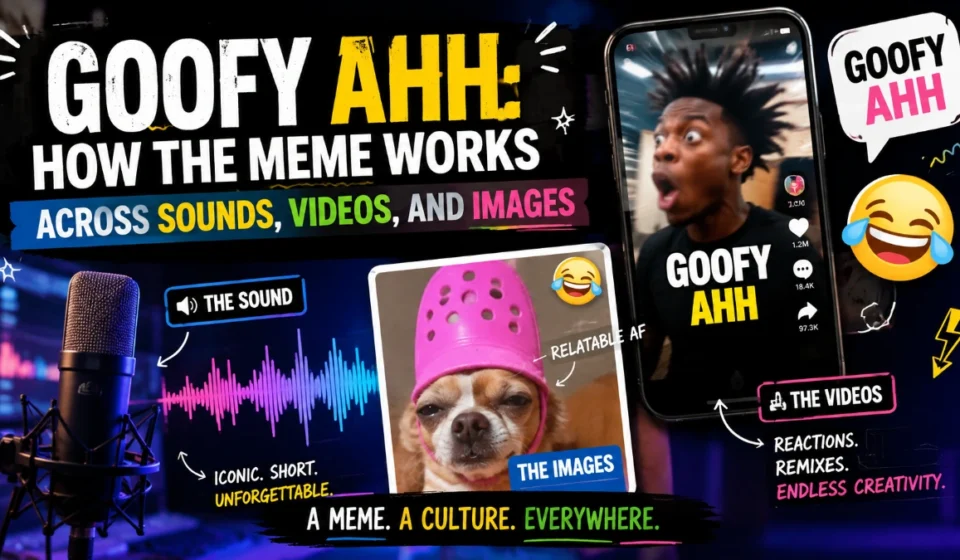
A goofy ahh sound is usually designed to derail the mood of a clip. A dramatic moment may suddenly get interrupted by a cartoon effect, an exaggerated vocal noise, or audio that is so mismatched that the interruption becomes the joke.
The label gained particular momentum as a TikTok comment in early 2022. It often appeared under clips using deliberately ridiculous audio associated with “21st Century Humor,” including cartoon-like or difficult-to-identify noises.
There is no single official sound file behind the phrase. The important feature is the effect: the audio makes an ordinary, serious, or low-key video feel unexpectedly unserious.
Then look at the video edit
In a video, goofy ahh can describe more than the audio. It may refer to an edit with strange timing, unnecessary visual emphasis, awkward reaction cuts, or a sequence that becomes increasingly chaotic for no practical reason.
The term became more prominent on TikTok in the latter half of 2021, when creators used it in captions, comments, and remix culture. TikToker and producer @proddadood was among the influential creators associated with “goofy ahh remixes,” which mixed popular songs with deliberately absurd sound effects.
This history explains why the phrase is so closely linked with short clips. It became a compact way to identify a particular comic choice: making the edit worse on purpose until the awkwardness becomes entertaining.
Images can be goofy ahh too
A still image does not need sound to fit the joke. goofy ahh can describe a strange camera angle, obvious face distortion, an extreme fisheye effect, or an ordinary object photographed so dramatically that it looks ridiculous.
The label is not a formal image category. It is simply a reaction to a visual that is awkward, exaggerated, or unexpectedly absurd.
For sharing, original images and permission matter. A bizarre photo of your own pet, workspace, or failed selfie can invite a harmless caption; using someone else’s unflattering picture without consent changes the joke from shared silliness into a possible pile-on.
What the phrase actually means
At its simplest, goofy ahh means “very silly,” “ridiculous,” or “absurd in a funny way.” It is normally used as a quick reaction to content that looks too strange or too exaggerated to take seriously.
The term is often read aloud roughly as “GOO-fee ah,” with a long “a” sound. Speech, spelling, and delivery can differ by community, so it is better treated as flexible online language than as a formal pronunciation rule.
Examples of the phrase appeared on Twitter as early as 2009, but no verified record identifies one person as its inventor. TikTok gave it wider visibility much later, particularly as absurd sound edits and meme compilations grew across the platform.
Caption choices that fit
The best captions identify the absurd part of the post instead of using the phrase as empty decoration. For example:
- “The serious edit lasted four seconds before the goofy ahh sound arrived.”
- “My phone camera found its most goofy ahh setting.”
- “This dog has a goofy ahh walk and knows it.”
- “Why does the blender sound like it is in a boss fight?”
Each example points to an edit, sound, object, or self-contained moment. That keeps the humour focused on the content rather than turning a person into the punchline.
When to skip it
goofy ahh may read as friendly teasing in a shared joke, but it can become dismissive when used without that shared context.
Skip the phrase when the post involves:
- Injury, grief, danger, or a personal disclosure
- Someone’s appearance, disability, identity, or manner of speaking
- An embarrassing clip shared without permission
- A situation where a clear response matters more than a reaction meme
A useful creator standard is simple: if the caption adds to a joke that the subject can enjoy, it is likely on safer ground. If it depends on public embarrassment, choose another angle.
Quick distinction
| You see | What it usually means |
| goofy ahh under a strange image or clip | “This is silly, absurd, or ridiculously overdone” |
| goofy ahh sound in a comment | The audio is cartoonish, exaggerated, chaotic, or unexpectedly silly |
| A “goofy ahh” caption | The creator is framing a harmless oddity as the joke |
Why context matters
The phrase’s usefulness comes from speed: it can identify the joke in a few words. But that does not make it interchangeable with every insult or every meme caption.
Use goofy ahh where the content itself is plainly absurd, and avoid treating its AAVE context as a disposable trend. The strongest use is specific: it tells the audience what is funny about the sound, edit, image, or moment they are already seeing.
Read more: Goofy Ahh: What It Means and When to Use It
Frequently Asked Questions
It means silly, ridiculous, or absurd in a funny way. It is commonly used for odd content, strange edits, exaggerated sounds, and harmless behaviour.
No. The wording was documented online as early as 2009, while TikTok made it much more visible in late 2021 and early 2022.
It is a loose label for intentionally absurd audio, such as cartoon-like effects, exaggerated noises, or audio that disrupts a video for comic effect.
No. The phrase refers to a comic sound style and a related comment trend, not one standard audio file.
It is often said roughly as “GOO-fee ah,” with a long “a” sound. Pronunciation can vary across speakers and communities.
Yes, when the post is clearly harmless and absurd. It fits best with an odd sound, strange edit, unexpected camera angle, or self-deprecating moment.
It can be. Friends may read it as playful teasing, but it can sound insulting or dismissive when directed at a stranger or used around a sensitive subject.
The phrase became associated with TikTok meme edits and spam-style comments about videos featuring silly, cartoonish, or indiscernible sound effects.