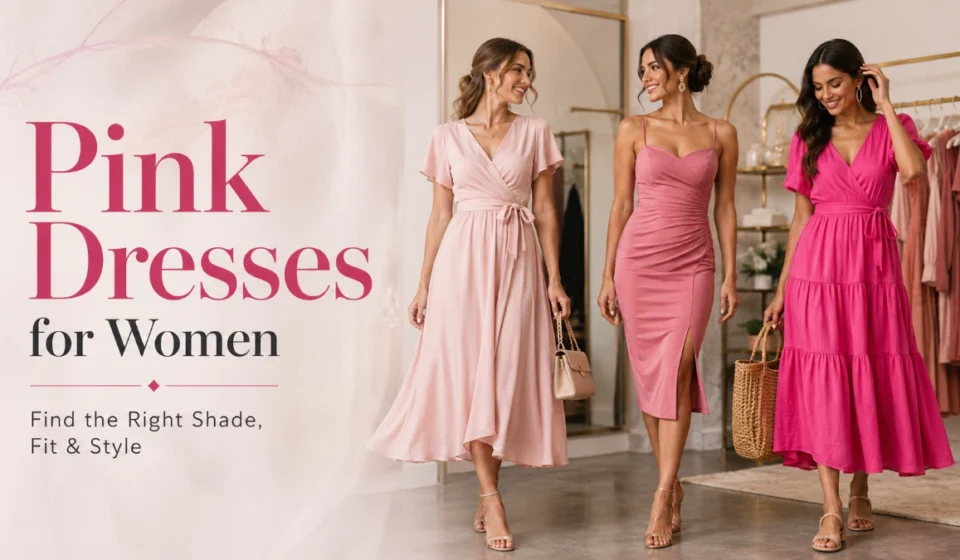

pink dresses for women: 7 Smart Ways to Find Your Perfect Style
How to Choose a Pink Dress
The best pink dresses for women match the occasion first, then the fit, fabric, and colour intensity you feel comfortable wearing. A casual daytime dress may benefit from an easy silhouette and breathable construction, while an evening outfit can lean into a smoother finish, a defined waist, or a more dramatic hem.
Start with the setting rather than the shade alone. That simple choice prevents common buying mistakes, such as selecting a glossy party dress for a relaxed daytime event or choosing a delicate, unlined style when you need dependable all-day coverage.
Match the Dress to the Occasion
For brunches, holidays, casual lunches, and daytime gatherings, look for a silhouette that allows easy movement. A shirt dress, fit-and-flare design, relaxed midi, or lightly printed style can feel put together without looking overly formal.
For dinners, parties, birthday plans, or date nights, consider a stronger pink, a wrap-inspired waist, a cleaner neckline, or a satin-like finish. These details often make an outfit feel more intentional, but the final effect still depends on shoes, accessories, and the event itself.
Workplace styling needs a different filter: follow the dress code first. A muted pink midi with a less revealing neckline and a tailored layer may be easier to adapt for professional settings than a very short, high-shine, or heavily embellished dress.
Choose the Pink Shade
Pink can range from light and blush tones to rose, crimson, magenta, and more vivid options. The observed VERO MODA collection includes light pink, crimson pink, rose pink, and magenta, illustrating how broad the colour family can be.
Soft blush and lighter pinks often create a quieter visual effect, particularly in matte fabrics and simpler shapes. A mid-tone rose pink can offer a balanced route when you want more presence than a pastel but less intensity than a bright statement shade.
For bolder pink dresses for women, keep the rest of the outfit more restrained if you want the colour to stay central. A simple bag, understated shoes, and limited jewellery can create a cleaner result than adding several competing focal points.
View product images carefully before buying. Lighting, sheen, screen settings, and image editing can all affect how saturated or warm a shade appears online, so close-up photographs and customer imagery, when available, can be useful additional checks.
Pick a Length and Silhouette
Pink-dress collections can include mini, midi, maxi, wrap, shift, pleated, and fit-and-flare designs. These labels describe different things: mini, midi, and maxi indicate hem length, while wrap, shift, and fit-and-flare describe how the dress is cut or shaped.
A mini dress may suit a playful or more leg-forward look, but check the seated length, neckline coverage, fabric weight, and freedom of movement before ordering. Those practical details matter more than the label alone.
A midi is often one of the easiest options to adapt. Pair it with trainers or flat sandals for a relaxed direction, or add refined shoes and a structured layer when the setting calls for more polish. A streamlined midi can feel sharper, while a fuller skirt creates a softer profile.
A maxi gives more leg coverage and can look relaxed, dramatic, or formal depending on the fabric and construction. Cotton-led maxis can work well for warm-weather plans, while a lined, fluid design with a refined finish can be better suited to an evening occasion.
Assess Fabric and Construction
When comparing pink dresses for women, treat fabric name as only one part of the decision. VERO MODA’s observed collection lists satin, rayon, silk, cotton, and polyester options, but comfort, opacity, drape, and care needs also depend on the garment’s weight, lining, seams, stretch, and finishing.
| Fabric or finish direction | Often considered for | Check before buying |
| Cotton or breathable blends | Casual dressing and warmer conditions | Lining, opacity, wrinkle tendency, care guidance |
| Rayon or fluid fabrics | Soft drape and movement | Transparency, stretch, wash instructions |
| Satin or satin-look finishes | Dinners, parties, polished events | Lining, snag risk, static, reflected light |
| Knit or stretch fabrics | Comfort-led and closer-fitting styles | Recovery, cling, thickness, transparency |
| Structured blends | Sharper silhouettes | Breathability, seam finish, ease of movement |
Satin describes a weave or finish rather than a single fibre, while polyester refers to a fibre. That is why the product composition and care label matter more than a headline fabric term by itself.
Get the Size Right Online
Do not assume the same label size will fit the same way across brands. VERO MODA’s size guidance notes that measurements and fit vary by brand, so the relevant brand’s own chart should guide the decision.
Use a measuring tape to record:
- Bust: Measure around the fullest part, keeping the tape level.
- Waist: Measure at the narrowest part of the torso.
- Hips: Measure around the fullest hip area with your feet together.
- Shoulders: Measure across the back if the retailer provides shoulder dimensions or the dress has a structured upper section.
Compare those numbers with the brand chart, then check whether the dress is fitted, lined, stretchy, or cut from a fabric with little give. If your measurements fall between two sizes, follow the retailer’s stated guidance; VERO MODA recommends choosing the larger size or ordering both where returns make that practical.
Also compare the listed dress length with your height and preferred footwear. Product photography gives useful context, but the garment measurement is the more reliable way to anticipate where a mini, midi, or maxi will fall on you.
Style the Finished Outfit
A simple styling rule is to decide what should be the focal point. If the dress is bright, shiny, printed, or embellished, quieter shoes and a minimal bag can prevent the outfit from looking visually crowded.
Pale or simple pink dresses for women leave more room for contrast. A textured jacket, distinctive shoe, or one visible jewellery piece can add definition without changing the dress’s overall mood.
Gold-toned rings, earrings, or a fine chain can pair naturally with many pink outfits, especially when another warm detail appears in the bag, footwear, or makeup. Keep scale in proportion: a detailed neckline or statement sleeve often needs less jewellery than a simple slip-style or sleeveless dress.
For footwear, white trainers create an easy casual direction, neutral sandals work for many warm-weather plans, and black heels give vivid pinks a stronger contrast. These are flexible routes, not fixed rules.
Check Before You Order
Use this checklist before purchasing pink dresses for women online:
- Compare your body measurements with the retailer’s own size chart
- Read the composition, lining, stretch, closure, and care information
- Inspect close-up photographs for seams, texture, lining, and transparency
- Compare the listed dress length with your height and likely footwear
- Consider whether your preferred underwear works with the neckline, straps, and fabric
- Read the return and exchange conditions before removing tags or wearing the dress
- Consider repeat wear: a dress that works in more than one setting may offer better value than a highly specific one
Frequently Asked Questions
A mid-tone rose pink is often easier to adapt because it sits between very pale and very vivid shades. The most suitable choice still depends on the event, fabric finish, and how much contrast you want in the finished outfit.
They can be, if the dress code allows them. A refined fabric, considered hem length, polished shoes, and restrained accessories generally influence formality more than the colour alone.
A midi is often easier to take from daytime to a more polished setting, while a maxi gives greater coverage and can create a relaxed or more dramatic effect. The fabric, neckline, and footwear can change either option substantially.
Check the lining and opacity first, then test your undergarments in daylight before an important event. A discreet option that does not show through the fabric is usually more useful than relying on colour alone.
Measure your bust, waist, hips, and—when relevant—shoulders, then compare them with the specific brand’s guide. Brand sizing and fit vary, so do not rely only on the size you usually buy.
White trainers suit relaxed dresses, neutral sandals work well for many warm-weather outfits, and black heels add contrast to brighter pinks. Match the shoe’s formality to the dress fabric, hem length, and occasion.
Yes. Gold-toned jewellery can work especially well when the outfit already includes a warm-toned detail. If the dress is bold or heavily detailed, choose fewer or smaller pieces to keep the overall look balanced.