
This bariatric gelatin recipe for weight loss is a simple, sugar-free snack made with just three ingredients: unflavored gelatin, water, and a zero-calorie liquid flavoring. Preparation takes about 5–10 minutes, followed by 2–4 hours of refrigeration. Each serving contains approximately 6 calories and 1.5 grams of protein when prepared with a calorie-free, carbohydrate-free flavoring. It’s a lighter alternative to many traditional desserts, although gelatin itself doesn’t burn fat or guarantee weight loss.
You won’t need any special equipment or advanced cooking skills. However, if you’ve had gastric sleeve or gastric bypass surgery, check with your bariatric team before eating set gelatin, especially during the early stages of recovery.
Bariatric Gelatin Recipe for Weight Loss
This three-ingredient gelatin recipe makes a lightly flavored, soft-set dessert without added sugar. You can prepare it ahead of time and keep individual servings refrigerated for a convenient snack.
Recipe details
- Prep time: 5–10 minutes
- Chilling time: Approximately 2–4 hours
- Total time: Approximately 2–4 hours, 10 minutes
- Servings: 4
- Serving size: Approximately ½ cup (120 mL)
- Estimated calories: 6 per serving, excluding any nutrients from the flavoring
Ingredients
- 1 envelope (7 g) unflavored gelatin
- 2 cups (475 mL) water, divided
- Zero-calorie, sugar-free, caffeine-free liquid water enhancer, using the label-recommended amount for approximately 16 fl oz (475 mL) of water
Choose a flavoring without added sugar. Lemon, berry, and peach are good options, depending on your taste. Since liquid concentrates vary in strength, follow the dilution instructions on the package rather than using a fixed amount.
Also, remember that some products contain small amounts of calories or carbohydrates even when their nutrition labels round these values to zero.
Step-by-Step Instructions
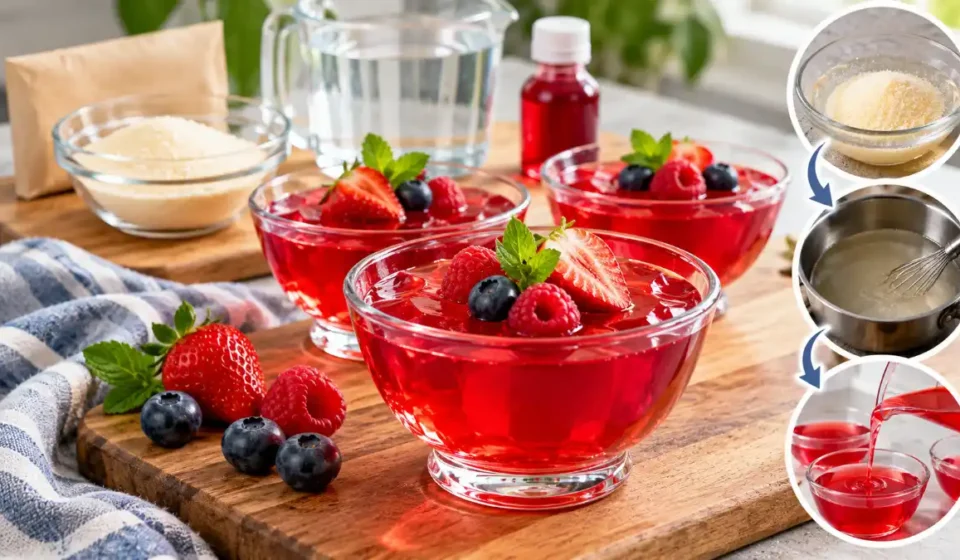
1. Bloom the gelatin. Pour ¼ cup (60 mL) of cold water into a small bowl. Sprinkle the gelatin evenly over the surface and leave it undisturbed for about 5 minutes. The granules should absorb the water and soften.
2. Heat the water. Warm ¾ cup (180 mL) of water in a saucepan until hot but not boiling. There’s no need to bring it to a rolling boil.
3. Dissolve the gelatin. Add the bloomed gelatin to the hot water and stir for 1–2 minutes, or until completely dissolved. The mixture should look smooth, without visible granules.
4. Add the flavoring. Pour in the remaining 1 cup (235 mL) of cool water, followed by the sugar-free liquid flavoring. Stir gently to distribute the flavor evenly.
5. Pour and refrigerate. Divide the mixture between four small serving dishes. Refrigerate for approximately 2–4 hours, until the gelatin holds its shape.
6. Serve chilled. Enjoy one portion as a light snack or dessert. If you’re following a postoperative bariatric diet, use the serving size recommended by your care team.
Helpful tip: Always bloom gelatin in cold water before dissolving it in hot liquid. Adding dry gelatin directly to hot water can create lumps that are difficult to remove. You can find additional preparation and setting guidance in the unflavored gelatin preparation instructions.
Nutrition Per Serving
These estimates are based on one 7 g envelope of unflavored gelatin divided into four equal portions. They don’t include any additional calories or nutrients from the flavoring.
| Nutrient | Approximate amount |
| Calories | 6 |
| Protein | 1.5 g |
| Carbohydrates | 0 g |
| Sugar | 0 g |
| Fat | 0 g |
Actual nutrition varies slightly by gelatin brand and flavoring. If you’re tracking carbohydrates or following a prescribed diet, check both ingredient labels rather than relying solely on these estimates.
Can This Gelatin Recipe Help With Weight Loss?
Sugar-free gelatin can fit into a weight-management plan because it satisfies a craving for something sweet without adding many calories. If you replace a higher-calorie dessert with a serving of gelatin, you may reduce your overall calorie intake.
That doesn’t mean gelatin itself causes weight loss.
Although gelatin contains protein derived from collagen, it isn’t a complete protein because it lacks tryptophan, an essential amino acid. This recipe also provides only about 1.5 grams of protein per serving, which is too little to make it a meaningful high-protein snack.
You may have seen the viral gelatin trick for weight loss, which involves eating gelatin before meals in hopes of feeling fuller. While gelatin may affect fullness in some circumstances, there’s insufficient evidence that following this trick produces meaningful, sustained weight loss on its own.
The practical benefit of this recipe is straightforward: it offers a low-calorie dessert option within a balanced eating plan. It shouldn’t replace nutritious meals or medically recommended protein supplements.
Is Gelatin Safe After Bariatric Surgery?
Sugar-free gelatin appears in some postoperative bariatric eating plans, but that doesn’t mean it’s suitable for every patient at every stage of recovery. Your procedure, individual tolerance, and surgeon’s instructions all matter.
After gastric sleeve or gastric bypass surgery, patients typically progress from liquids to puréed foods, soft foods, and eventually regular textures. The timeline varies. The dietary guidance for gastric bypass recovery explains why following your healthcare team’s instructions is essential during this process.
Before eating this recipe:
- Confirm your dietary stage. Don’t assume set gelatin is permitted just because your current plan allows clear liquids.
- Begin with an appropriate portion. A full ½-cup serving may be too much during early recovery. Follow your prescribed limits.
- Check the ingredients. Avoid added sugar, caffeine, and any sweeteners or flavorings your bariatric team has restricted.
- Prioritize protein intake. Gelatin provides incomplete protein and cannot replace protein-rich foods or prescribed supplements.
- Pay attention to tolerance. If you experience nausea, discomfort, or unusual fullness, stop eating. Contact your care team if symptoms continue.
Protein intake is particularly important after weight-loss surgery. The American Society for Metabolic and Bariatric Surgery’s postoperative guidance describes commonly recommended daily protein intakes of 60–100 grams, depending on individual needs.
With only 1.5 grams of protein per serving, this gelatin is better treated as an occasional dessert than a significant source of postoperative nutrition.
Easy Gelatin Recipe Variations
Once you’re comfortable with the basic recipe, you can adjust the flavor or ingredients. If you’ve undergone bariatric surgery, make sure any changes are compatible with your prescribed eating plan.
Sugar-Free Flavored Gelatin
For a quicker option, use a packaged sugar-free flavored gelatin mix and prepare it according to the instructions.
These products already contain gelatin, sweeteners, and flavorings, so there’s usually no need to add another envelope of unflavored gelatin.
Check the nutrition label, since calories and protein content may differ from the homemade recipe.
Naturally Flavored Gelatin
If you prefer a milder, less sweet dessert, replace some of the water with unsweetened, caffeine-free herbal tea. A small amount of suitable sugar-free flavor extract can also work.
Keep the total liquid quantity at approximately 2 cups (475 mL) to maintain the intended consistency.
Without additional sweetener, the gelatin will taste less sweet than versions made with flavored drink concentrates.
High-Protein Gelatin Recipe
You can make a protein-enriched version using a suitable protein powder or ready-to-drink protein supplement.
For example, certain whey protein products contain complete protein, unlike gelatin. If you’re considering different formulations, this Ascent protein guide explains the differences between whey, clear whey, and casein options.
However, adding protein powder can affect how the gelatin sets. Some powders clump in hot liquids, while others change the final texture.
After bariatric surgery, use only protein products approved by your dietitian. Follow their preparation guidance and recalculate the calories and protein content whenever you modify the recipe.
Why Is My Gelatin Not Setting?
Homemade gelatin is fairly forgiving, but incorrect measurements or preparation can leave it too soft, lumpy, or unusually firm.
The gelatin is too soft: You may have used too much water or too little gelatin. Check your measurements and give it more time to chill. One 7 g envelope generally sets about 2 cups of liquid.
The mixture contains lumps: The gelatin probably didn’t bloom or dissolve completely. Sprinkle it evenly over cold water first, then stir it into hot water until smooth.
The gelatin is rubbery: Too much gelatin can produce an unpleasantly firm texture. Use slightly less next time if you prefer a softer dessert.
The dessert remains liquid: Make sure you’ve used regular unflavored gelatin rather than collagen peptides. Although both come from collagen, collagen peptides don’t produce the same firm gel. If the mixture still hasn’t set after sufficient refrigeration, you can gently rewarm it and dissolve a little additional bloomed gelatin into it.
Fresh pineapple, kiwi, papaya, and certain other fruits contain enzymes that interfere with gelatin setting. Avoid adding these fruits raw.
Storage and Serving Tips
Store homemade gelatin in covered containers in the refrigerator at 40°F (4°C) or below. As a conservative freshness guideline, plan to eat it within 3–4 days. This isn’t a guaranteed shelf life, so discard any gelatin that shows signs of spoilage or has been stored improperly.
Refrigerate the dessert promptly and use clean utensils when serving. General food-safety recommendations for refrigeration advise keeping perishable foods out of room temperature for no longer than two hours, or one hour in temperatures above 90°F (32°C).
Freezing isn’t ideal because gelatin can release water and lose its smooth texture after thawing.
For general weight management, a ½-cup serving can fit into your usual snack routine. There’s no established frequency that makes gelatin especially effective for weight loss, so eating it several times daily offers no proven advantage.
If you’ve had bariatric surgery, follow your prescribed portions and meal schedule. Your nutritional priorities should remain adequate protein, fluids, essential nutrients, and a balanced eating pattern that supports long-term health.
Frequently Asked Questions
Is this bariatric gelatin recipe vegetarian?
No. Traditional gelatin comes from animal collagen, usually obtained from pork or cattle. Because of its animal origin, it isn’t suitable for vegetarian or vegan diets.
Can I use agar agar instead of gelatin?
Yes, but agar agar isn’t a direct one-to-one substitute. It’s a plant-based gelling ingredient derived from seaweed and generally needs to be heated to a boil to activate properly. It also creates a firmer, more brittle texture than gelatin. Follow the agar-agar product’s instructions for the correct quantity and preparation method.