
hognose snake lifespan: 5 Essential Facts About Their Life
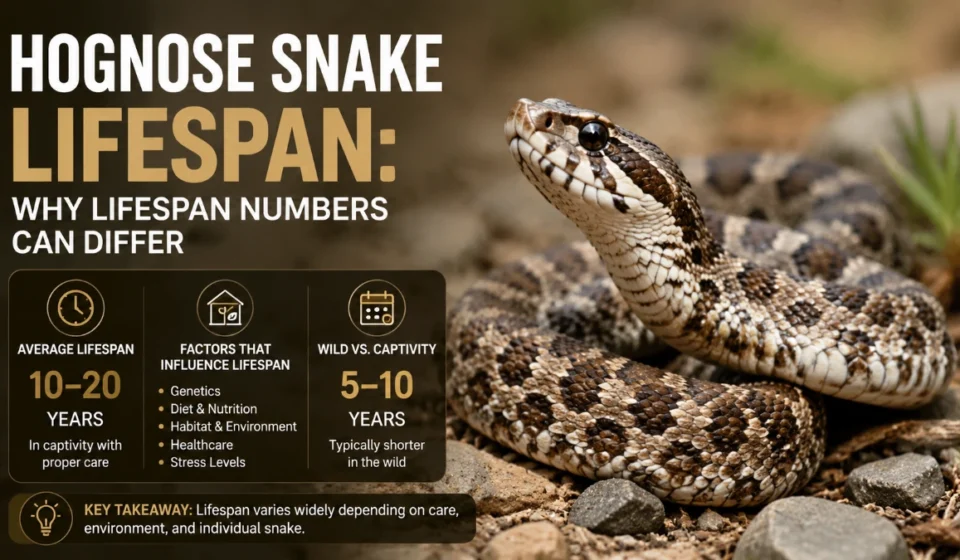
The hognos snake lifespan is not represented by one universal number. Different hognose snake species can have different longevity patterns because biology, habitat, environmental challenges, and living conditions all influence survival.
For commonly kept species such as the western hognose snake (Heterodon nasicus), reported captive lifespans can reach around 15–20 years when appropriate care is provided. Wild lifespan estimates are more difficult to determine because researchers cannot easily follow individual snakes throughout their entire lives.
To understand what a lifespan claim really means, it is important to look at the species, environment, and conditions behind the number.
Why Lifespan Numbers for Hognose Snakes Are Not Always the Same
When people search for the lifespan of a hognose snake, they are often expecting one simple answer. However, the term “hognose snake” includes multiple species with different natural histories.
The western hognose snake is one of the best-known species in captivity, so more longevity information is available for it. Other species, such as the eastern hognose snake (Heterodon platirhinos), live under different ecological conditions and may not have identical lifespan information.
A reliable lifespan estimate should always include the species being discussed. A number that applies to one hognose snake species should not automatically be transferred to another.
Comparing Hognose Snake Lifespan by Environment
| Living Situation | What Is Known |
| Captive western hognose snake | Reported to reach around 15–20 years with suitable care |
| Wild hognose snakes | Exact lifespan is difficult to measure because long-term tracking is limited |
| Different hognose species | Longevity can vary because of biology and environmental conditions |
These figures describe general expectations, not guaranteed outcomes. Individual snakes may live different lengths of time because each animal has unique health, genetics, and circumstances.
How Wild Conditions Change Longevity
A wild hognose snake must survive natural challenges throughout its life.
These challenges can include:
- predators;
- changing weather conditions;
- food availability;
- habitat changes;
- illness and parasites.
Because wild snakes are difficult to monitor continuously, researchers often have limited information about their complete lifespan. This means wild longevity estimates usually contain more uncertainty than captive observations.
The natural environment plays a major role in survival because the snake must balance finding food, avoiding threats, and adapting to seasonal changes.
Why Captive Hognose Snakes May Have Different Lifespan Records
Captive environments allow owners to provide consistent conditions that are difficult to maintain in nature.
These conditions may include:
- regular feeding;
- controlled habitat conditions;
- protection from predators;
- health monitoring.
However, captivity does not automatically guarantee a longer life. The quality of care matters. Incorrect environmental conditions, poor nutrition, or unnecessary stress can negatively affect a snake’s wellbeing.
When considering a captive hognose snake, the useful question is not only “How many years can it live?” but also “What conditions are needed to support a healthy life?”
Factors That Influence Hognose Snake Longevity
Several factors contribute to how long individual snakes survive.
Species and Genetics
Different species naturally have different traits. Individual genetic differences can also influence health and resilience.
Nutrition
Appropriate nutrition supports normal growth and body function. A suitable feeding approach is more important than simply providing more food.
Habitat Conditions
A properly maintained environment can support healthier behavior and reduce unnecessary stress.
Important considerations include:
- suitable temperature conditions;
- appropriate enclosure setup;
- hiding opportunities;
- access to clean water.
Stress and Health Management
A stable environment and careful handling can support better wellbeing. Changes in behavior or physical condition may indicate that a snake’s needs are not being met.
How to Interpret Lifespan Information Before Keeping a Hognose Snake
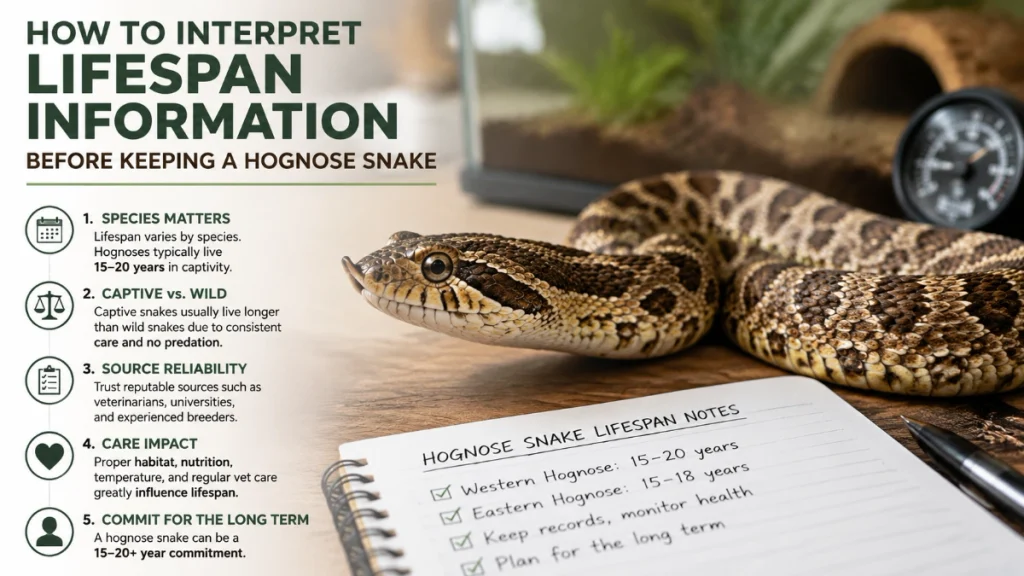
A lifespan estimate can help set expectations, but it should not be treated as a guarantee.
Someone researching a hognose snake should consider:
- which species they are learning about;
- whether the information comes from captive or wild observations;
- whether the care requirements can be met consistently;
- whether they understand the long-term responsibility involved.
The hognose snake lifespan is ultimately shaped by the interaction between the animal’s biology and the environment in which it lives.
Common Lifespan Misunderstandings
“Every hognose snake lives the same number of years”
Not true. Different species and individual conditions can create different outcomes.
“Captive snakes always outlive wild snakes”
Captivity may remove some natural dangers, but poor care can still reduce longevity.
“A lifespan estimate tells exactly how old a snake will become”
Lifespan ranges describe common patterns, not guaranteed ages for individual animals.
Frequently Asked Questions
The average lifespan varies depending on the species and environment. Captive western hognose snakes are commonly reported to reach around 15–20 years under suitable conditions.
Some captive hognose snakes can reach around 20 years, although individual lifespan depends on health, genetics, and care conditions.
Wild snakes are challenging to follow over many years, making complete lifespan records uncommon.
No. Different species have different biology and environmental pressures.
Captivity can reduce some natural risks, but good care is required for healthy longevity.
Poor habitat conditions, unsuitable nutrition, illness, and stress may negatively affect health.
They can be long-term commitments because responsible ownership requires consistent care over many years.
Yes, it is one of the more commonly studied and kept hognose species, so more lifespan information is available.
Providing suitable habitat conditions, appropriate nutrition, and regular observation can support overall wellbeing.
The biggest mistake is applying one lifespan number to every hognose snake species without considering differences in biology and environment.