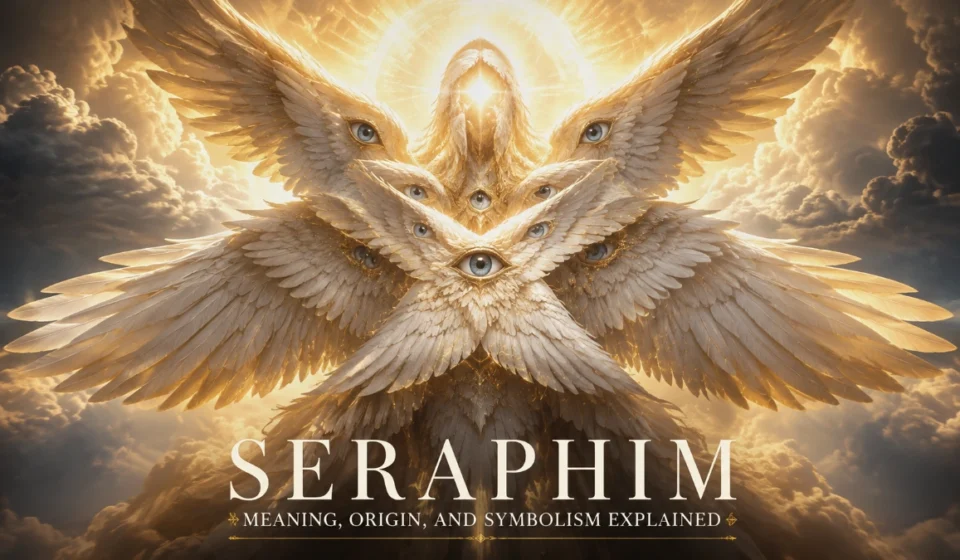

seraphim: 7 Powerful Sacred Insights Explained Clearly
What Are seraphim?
The term seraphim refers to celestial beings described in religious traditions, especially within biblical literature. They are most famously connected with the prophetic vision recorded in Isaiah 6, where they appear in the presence of God and are associated with worship and holiness.
Unlike ordinary creatures described through physical categories, seraphim belong to the realm of religious belief, symbolism, and theological interpretation. Their importance comes from the ideas they represent, including devotion, reverence, purity, and the relationship between humanity and the divine.
The meaning of these beings is understood differently across traditions. Some interpretations focus on their role in worship, while others examine their symbolic connection with spiritual transformation and divine presence.
The Origin of the Seraphim Concept
The biblical foundation of seraphim comes primarily from Isaiah’s vision in the Old Testament. In this passage, Isaiah describes a heavenly scene in which these beings surround the divine throne and proclaim praise.
The biblical description of seraphim became the foundation for later theological discussions. Religious scholars and communities have explored their role, significance, and relationship with other celestial figures throughout history.
Later interpretations expanded the understanding of these beings through theology, artwork, literature, and religious commentary. These later traditions may add perspectives that go beyond the original textual description.
The Symbolic Meaning Behind Seraphim
Many interpretations connect seraphim with ideas of holiness, purification, worship, and closeness to the divine. Their imagery is often viewed as symbolic rather than a literal description that can be measured or scientifically examined.
The association with fire is commonly understood as representing spiritual intensity, purification, or a powerful connection with sacred presence. These meanings reflect theological interpretations developed within religious traditions.
Because different communities approach sacred texts in different ways, symbolic explanations may vary. Understanding this distinction helps separate the original text from later interpretations.
How Are Seraphim Described?
In Isaiah’s vision, seraphim are described as having six wings. Two wings cover their faces, two cover their feet, and two are used for flying.
This imagery is one of the most recognizable features connected with them. Many interpretations view the covered face and feet as symbols of humility and reverence before the divine.
Artistic representations created over time may portray these beings differently. These images often reflect cultural traditions, artistic choices, and theological perspectives rather than only the original biblical description.
Are Seraphim Angels?
A common question is whether seraphim are angels. The answer depends on the religious framework being discussed.
Some traditions place them within broader heavenly hierarchies that include angels and other spiritual beings. Other interpretations distinguish between different categories of celestial figures.
The terms are therefore not always interchangeable. Understanding the specific tradition being discussed is important when comparing these concepts.
Seraphim and Cherubim: Key Differences
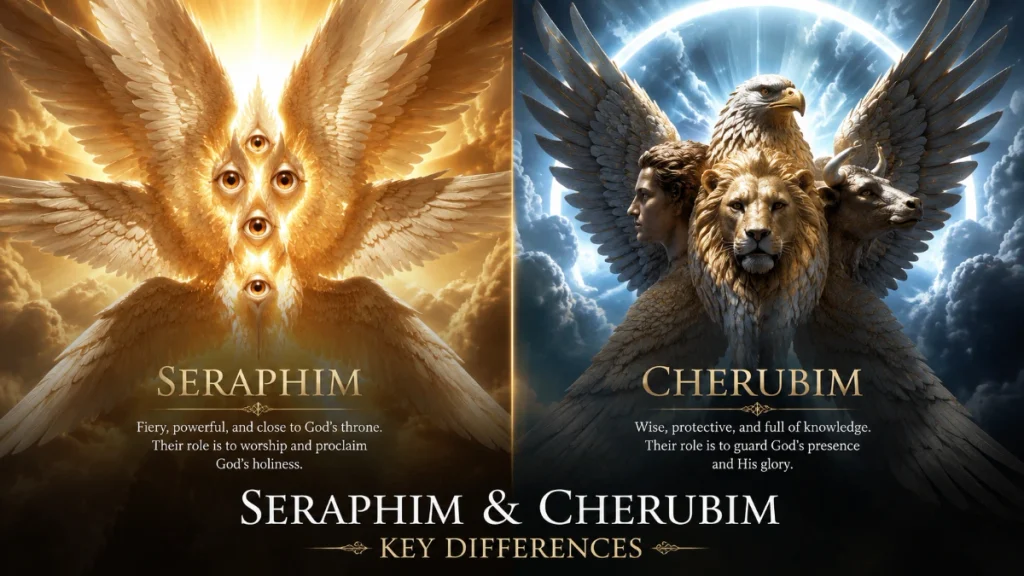
Seraphim and cherubim are both important figures in religious traditions, but they have different descriptions and symbolic associations.
| Feature | Seraphim | Cherubim |
| Main association | Worship, holiness, and divine presence | Guardianship and sacred protection |
| Famous reference | Isaiah 6 | Various biblical passages |
| Symbolic themes | Purity, devotion, and reverence | Protection and divine authority |
| Descriptions | Six-winged beings in Isaiah’s vision | Different forms depending on the text |
These distinctions are based on religious texts and interpretations. Different theological traditions may organize these beings in different ways.
Why Seraphim Remain Important in Culture and Religion
The concept of seraphim continues to influence religious studies, visual art, literature, and discussions about spiritual symbolism.
Their imagery has appeared in religious artwork because the combination of wings, fire, and worship creates a powerful representation of holiness and divine mystery. For many believers, these beings represent devotion and closeness to the divine.
For researchers and historians, studying these figures provides insight into how societies have used symbolic imagery to express ideas about the sacred.
Common Misconceptions About Seraphim
Are seraphim the same in every religious tradition?
No. Different traditions interpret their role, meaning, and relationship with other celestial beings differently.
Are seraphim scientifically proven beings?
They are understood within religious belief systems and symbolic traditions rather than as scientifically verified entities.
Are seraphim always the highest-ranking heavenly beings?
Not universally. Heavenly hierarchies differ among theological systems.
Frequently Asked Questions
seraphim refers to celestial beings described in religious traditions, especially those connected with Isaiah’s vision.
They are most famously described in Isaiah 6.
In Isaiah’s description, they have six wings.
They are commonly interpreted as symbols of holiness, worship, purity, and devotion.
Some traditions connect them, while others distinguish between different types of celestial beings.
Yes. They have different descriptions and symbolic associations in religious texts.
They provide insight into ideas about divine presence, worship, and symbolic representation.