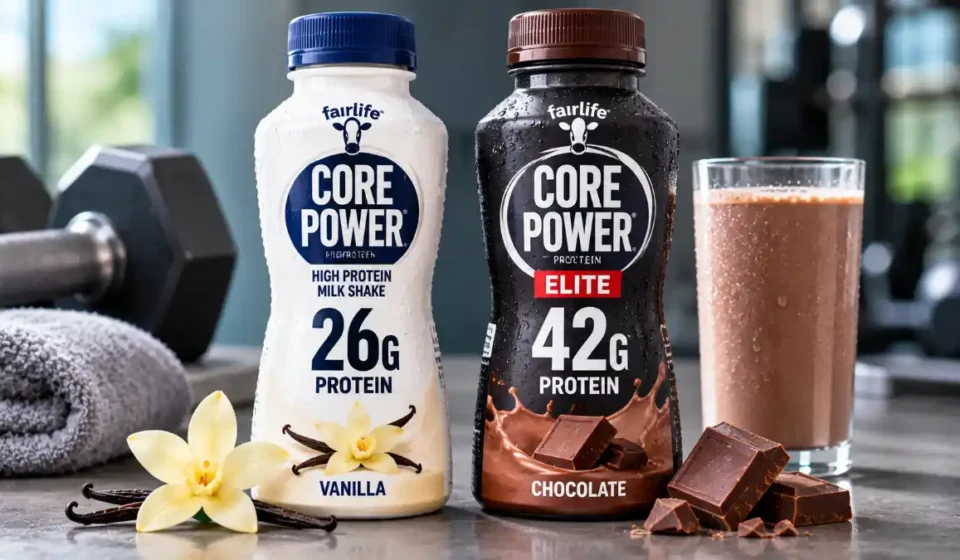

Core Power protein shakes are Fairlife’s ready-to-drink, ultra-filtered milk beverages made for convenient protein intake and post-workout recovery. Regular Core Power contains 26 grams of protein per bottle, while Core Power Elite provides 42 grams. Both deliver complete dairy protein, are lactose-free and gluten-free, and contain zero added sugar. They’re convenient options for meeting daily protein needs, but the higher-protein Elite version isn’t necessarily better for everyone.
If you’re looking for a moderate protein boost, the regular 26g shake offers a good balance of nutrition and price. Elite may be worth the extra cost if you have higher protein requirements. The right choice depends on your diet, fitness goals, taste preferences, and budget.
Core Power 26g vs 42g: Nutrition and Price Comparison
Both versions come in 14-fl-oz (414-mL) bottles, but their calories, carbohydrates, fat, and micronutrients vary by flavor.
The comparison below uses the official US nutrition information for Core Power Vanilla 26g and Core Power Elite Chocolate 42g.
| Nutrition per bottle | Core Power 26g Vanilla | Core Power Elite 42g Chocolate |
| Bottle size | 14 fl oz | 14 fl oz |
| Calories | 170 | 230 |
| Protein | 26g | 42g |
| Carbohydrates | 6g | 9g |
| Total sugar | 5g | 7g |
| Added sugar | 0g | 0g |
| Total fat | 4.5g | 3.5g |
| Calcium | 670mg | 900mg |
| Vitamin D | 5mcg | 10mcg |
| Potassium | 780mg | 700mg |
| Approximate US price | 3.88–3.99 | 5.28–5.49 |
| Main advantage | Lower price and calories | More protein per serving |
| Main limitation | Less protein per bottle | Higher price and calories |
Prices reflect US retail listings checked in November 2026 and may change with location, retailer, or promotions. Nutrition values can also vary between flavors and formulations, so always check the label on the bottle you’re buying.
In these examples, Elite provides 16g more protein for an additional 60 calories. It also costs less per gram of protein at the listed prices. However, paying more per bottle may not make sense if the regular shake already provides enough protein for your needs.
Core Power Protein Shake Ingredients and Protein Quality
Core Power gets its protein from ultra-filtered cow’s milk rather than separately added protein powders. Ultra-filtration concentrates the milk’s naturally occurring proteins while reducing some of its sugar.
Milk contains two main proteins, casein and whey, which together supply all nine essential amino acids. These amino acids help your body maintain and repair muscle tissue.
The current US Vanilla 26g and Elite Chocolate 42g formulations also contain:
- Lactase enzyme: Breaks down lactose, making the shakes suitable for many people with lactose intolerance.
- Sweeteners: Monk fruit, stevia, sucralose, and acesulfame potassium add sweetness without added sugar.
- Carrageenan and cellulose gums: Help prevent separation and maintain a smooth texture.
- Vitamins A and D: Contribute to the shakes’ nutritional value.
Core Power does contain artificial sweeteners, including sucralose and acesulfame potassium. These are permitted food ingredients, although some people dislike their taste or prefer products without them. Ingredient lists can differ by flavor.
It’s also important to understand that lactose-free doesn’t mean dairy-free. Core Power still contains milk proteins, so it isn’t suitable for people with a milk protein allergy.
According to Fairlife’s product FAQ, Core Power protein shakes are caffeine-free, including the chocolate varieties.
Are Core Power Protein Shakes Healthy?
Core Power can fit into a healthy, balanced diet, especially when getting enough protein from regular meals isn’t convenient.
Its main nutritional strengths are complete protein, calcium, vitamin D, and zero added sugar. Still, zero added sugar doesn’t mean sugar-free. Regular Vanilla contains 5g of total sugar, while Elite Chocolate has 7g per bottle.
There are a few trade-offs. Core Power is generally more expensive than preparing a protein shake at home, contains nonnutritive sweeteners, and doesn’t offer the fiber or variety of nutrients you’d get from a balanced meal.
For generally healthy adults, having one daily can be reasonable if it fits their protein and calorie needs. Anyone with kidney disease or a medically prescribed protein restriction should discuss their intake with a healthcare professional.
Does Core Power Help Build Muscle or Support Weight Loss?
Core Power provides high-quality protein that can support muscle repair and growth when paired with sufficient food intake and resistance training. Drinking the shake alone, however, won’t build muscle.
The NIH’s guidance on exercise and athletic performance notes that athletes may need approximately 1.2–2.0g of protein per kilogram of body weight daily, depending on their training demands.
Both Core Power versions can help meet those needs. Elite’s 42g serving is convenient if your protein target is relatively high, but getting more protein from a single shake doesn’t guarantee greater muscle growth.
Protein may also help you feel fuller and preserve muscle during weight loss. That doesn’t mean Core Power burns fat or automatically leads to weight loss. Your overall calorie intake still matters.
You can drink Core Power even if you don’t exercise. It’s useful as a protein-rich snack or supplement, though it isn’t designed to replace a nutritionally balanced meal.
Core Power Flavors, Taste, and Texture
Core Power’s US lineup includes several flavors:
- Regular 26g: Chocolate, Vanilla, and Strawberry Banana.
- Elite 42g: Chocolate, Vanilla, and Strawberry.
Core Power has a creamy, milkshake-like consistency, making it different from some thinner ready-to-drink protein beverages.
Chocolate and Vanilla generally receive favorable customer ratings at major US retailers, with observed ratings around 4.6–4.7 out of 5 in November 2026. Those scores reflect customer opinions rather than independent taste testing. Some people enjoy the sweetness and creamy texture, while others may notice an aftertaste from the sweeteners.
If you enjoy chocolate milk, Chocolate is a familiar option to consider. Vanilla has a more neutral flavor, while Strawberry Banana and Elite Strawberry offer fruit-flavored alternatives. Keep in mind that the two strawberry varieties have different formulations.
Core Power is shelf-stable before opening, but it generally tastes better chilled.
Core Power vs Other Protein Shakes
Core Power competes with Fairlife Nutrition Plan, Premier Protein, and conventional protein powders, although each offers different advantages.
Fairlife Nutrition Plan is a separate product line containing 30g of protein, 150 calories, and 2g of total sugar per serving. Compared with regular Core Power Vanilla, it offers slightly more protein with fewer calories and less sugar. Nutrition Plan is marketed for everyday nutrition, while Core Power focuses on exercise recovery.
Premier Protein offers classic ready-to-drink shakes containing 30g of protein and 160 calories per serving. Its ingredients differ from Core Power’s ultra-filtered milk formula, so comparing individual labels is worthwhile if sugar, sweeteners, or other ingredients matter to you.
Protein powders can cost less per serving and give you more control over your protein intake. For example, Ascent Protein offers whey-based powders for people who prefer mixing their own shakes. The drawback is that powders require preparation, making them less convenient when you’re traveling or leaving the gym.
Core Power’s biggest selling point is convenience: you get substantial complete dairy protein without measuring, mixing, or carrying a shaker bottle. The main compromise is its higher cost compared with many homemade options.
Where to Buy Core Power Protein Shakes
Core Power is available through major US retailers, including Walmart and Target. Costco, Sam’s Club, Amazon, and other sellers may also carry selected products, although availability varies by location, flavor, and package size.
The following prices were observed in November 2026:
| Retailer | Regular 26g | Elite 42g |
| Walmart | $3.88 | $5.28 |
| Target | $3.99 | $5.49 |
Based on the listed Walmart Core Power prices, regular Core Power costs approximately $3.73 per 25g of protein, compared with $3.14 for Elite. So while Elite costs more per bottle, it can offer better value if you need the additional protein.
Buying multipacks may save money. For example, a listed 12-pack of regular Vanilla at $39.99 works out to approximately $3.33 per bottle. Compare the unit price rather than assuming every multipack is cheaper.
Unopened Core Power shakes are shelf-stable and can be stored at room temperature. Once opened, refrigerate any remaining shake and follow the package’s storage instructions. Always check the printed date before drinking.
Final Verdict: Is Core Power 26g or Elite 42g Worth Buying?
Regular Core Power 26g is a practical choice if you want a moderate protein boost without spending as much per bottle. It provides complete dairy protein, has fewer calories than the compared examples, and is convenient for busy days or after a workout.
Core Power Elite 42g makes more sense when your daily protein needs are higher, particularly if you struggle to meet them through meals alone. Although it costs more upfront, its protein-per-dollar value can be better.
Neither version replaces a balanced diet or guarantees muscle growth or weight loss. The better purchase is the one that provides the protein you actually need at a price you’re comfortable paying.
Frequently Asked Questions
Do you need to drink Core Power immediately after a workout?
No. Drinking protein after exercise can support recovery, but you don’t need to finish a Core Power shake the moment your workout ends. Meeting your overall daily protein needs and spreading protein intake across meals generally matters more than following an exact post-workout deadline.
Can Core Power cause stomach discomfort even though it’s lactose-free?
Yes, it’s possible. Although Core Power is lactose-free, some people may be sensitive to other ingredients or find that a large serving of milk-based protein causes digestive discomfort. If you consistently experience symptoms after drinking it, stop using the product and discuss persistent symptoms with a healthcare professional.

[…] clearly defined complete-protein source, a conventional shake may be a better fit. For example, our Core Power protein shake review covers a milk-based ready-to-drink alternative with a different protein composition and nutritional […]