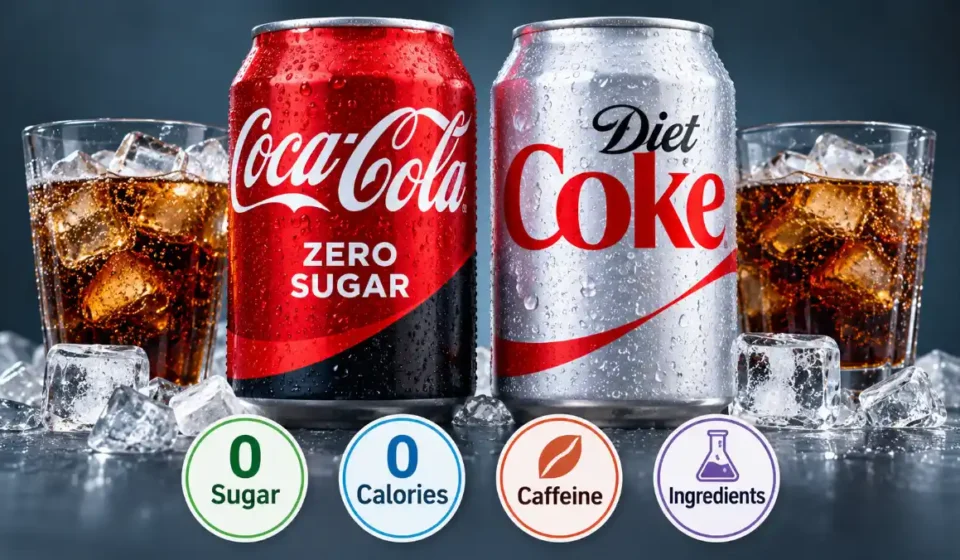

Coke Zero and Diet Coke are both zero-sugar, zero-calorie colas, but they differ in taste, ingredients, and caffeine content. Coke Zero Sugar is designed to taste more like regular Coca-Cola, while Diet Coke has its own lighter, crisper flavor. Their sweetener formulas also differ. A 12-ounce can of Diet Coke contains 46 mg of caffeine, compared with 34 mg in Coke Zero.
Neither drink is necessarily healthier than the other. Both let you enjoy cola without the added sugar or calories found in regular soda, but they still contain non-sugar sweeteners and acidic ingredients. Choosing between them comes down to your taste preferences, caffeine sensitivity, and dietary needs.
Coke Zero vs Diet Coke: Key Differences at a Glance
The following comparison uses standard US formulations and a 12-fluid-ounce (355-mL) serving, based on official product information for Coca-Cola Zero Sugar and Diet Coke.
| Feature | Coke Zero Sugar | Diet Coke |
| Taste | Closer to original Coca-Cola | Lighter, distinct cola flavor |
| Calories | 0 | 0 |
| Sugar | 0 g | 0 g |
| Carbohydrates | 0 g | 0 g |
| Sodium | 40 mg | 40 mg |
| Sweeteners | Aspartame, acesulfame potassium (Ace-K), stevia extract | Aspartame |
| Caffeine | 34 mg | 46 mg |
| Intended experience | Classic Coke-style taste without sugar | Distinctive diet cola taste |
Flavor and caffeine are the most noticeable differences. The drinks have nearly identical basic nutrition facts, but their ingredient lists and intended taste experiences aren’t the same.
Coke Zero vs Diet Coke Ingredients and Taste
Both drinks contain carbonated water, caramel color, phosphoric acid, natural flavors, potassium benzoate, and caffeine. What sets them apart is the combination of sweeteners, flavorings, and other ingredients.
Coke Zero Sugar contains aspartame and acesulfame potassium (Ace-K), along with stevia extract in its current US formulation. It also contains potassium citrate. Its flavor is developed to recreate the familiar taste of original Coca-Cola without using sugar.
Diet Coke uses aspartame as its sweetener in the standard US formula. Unlike Coke Zero Sugar, it contains citric acid and has a flavor profile of its own, often described as lighter and crisper.
These differences can affect how sweet or acidic each drink tastes, along with its aftertaste. Still, flavor is personal. Someone who loves Diet Coke might find Coke Zero too similar to regular Coke, while another person may prefer that familiar taste.
The exact flavor blends are proprietary, so there’s no reliable way to attribute every sensory difference to a single ingredient.
Coke Zero also isn’t simply regular Coca-Cola with the sugar removed. It has a separate formula designed to deliver a similar overall flavor.
Coke Zero vs Diet Coke: Caffeine and Nutrition
Diet Coke contains more caffeine than Coke Zero: 46 mg versus 34 mg per 12-ounce can. That’s 12 mg more caffeine, or approximately 35% higher.
For most healthy adults, neither amount is particularly high. However, caffeine affects people differently. If caffeine makes you feel jittery, anxious, or interferes with your sleep, Coke Zero may be the more comfortable choice.
During pregnancy, the American College of Obstetricians and Gynecologists’ caffeine guidance recommends consuming less than 200 mg daily from all sources, including coffee, tea, chocolate, and soft drinks.
Nutritionally, the two colas are almost identical. Both contain zero calories, zero sugar, and zero carbohydrates, with 40 mg of sodium per serving. Neither provides meaningful amounts of protein, fiber, or essential nutrients.
Caffeine-free versions of both beverages are also available in the US, although you may not find every variety at every store.
Is Coke Zero Healthier Than Diet Coke?
There’s no convincing evidence that Coke Zero is inherently healthier than Diet Coke. Replacing regular sugary soda with either beverage can reduce your added sugar and calorie intake, but neither offers substantial nutritional benefits.
A few health considerations are worth understanding before making either drink a regular habit.
Artificial Sweeteners and Safety
Both drinks contain aspartame. Coke Zero Sugar also contains Ace-K and, according to its current US ingredient list, stevia extract.
The FDA considers approved sweeteners safe when consumed within their established conditions of use. Its guidance on aspartame and other sweeteners provides the following acceptable daily intake (ADI) limits:
- Aspartame: 50 mg per kilogram of body weight per day.
- Acesulfame potassium: 15 mg per kilogram of body weight per day.
These limits represent amounts considered safe for daily consumption over a lifetime. They aren’t recommended consumption targets.
The International Agency for Research on Cancer (IARC) has classified aspartame as possibly carcinogenic to humans. However, identifying a possible hazard doesn’t establish that consuming ordinary dietary amounts causes cancer. Regulatory safety evaluations consider exposure levels, while hazard classifications address whether a substance could potentially cause harm under some circumstances.
People with phenylketonuria (PKU), a rare inherited metabolic condition, must carefully restrict phenylalanine, which is found in aspartame. Both Coke Zero and Diet Coke carry a phenylalanine warning.
Blood Sugar and Diabetes
Because neither beverage contains sugar or carbohydrates, they generally don’t cause the immediate blood glucose rise associated with regular sugary soda.
For people managing diabetes, replacing sugar-sweetened Coca-Cola with either drink may help reduce carbohydrate intake. That can be useful when following a meal plan that involves monitoring carbohydrates.
However, neither drink treats diabetes or guarantees better long-term blood sugar control. Medications, overall eating habits, physical activity, and individual health circumstances all influence glucose management.
Water and unsweetened beverages remain preferable choices for everyday hydration.
Weight Management
Replacing regular soda with Coke Zero or Diet Coke can reduce your calorie intake, especially if you regularly drink sugar-sweetened beverages. Whether that leads to weight loss depends on your overall diet and whether you compensate by consuming additional calories elsewhere.
Neither beverage directly burns fat or guarantees weight loss.
The World Health Organization’s guidance on non-sugar sweeteners recommends against relying on them for long-term weight control. This conditional recommendation applies to people without pre-existing diabetes and reflects limited evidence of lasting weight-management benefits, along with concerns raised by observational research.
Some studies have found associations between long-term consumption of artificially sweetened beverages and adverse health outcomes. However, an association doesn’t necessarily mean the drinks caused those outcomes.
The practical benefit of Coke Zero and Diet Coke is that they provide lower-calorie alternatives to sugary soda, not that they function as weight-loss products.
Dental Health
Both beverages contain acids, including phosphoric acid, that can gradually wear down tooth enamel with frequent exposure.
Although they contain no sugar, that doesn’t make them harmless to teeth. The American Dental Association’s guidance on dental erosion identifies frequent consumption of acidic soft drinks as a risk factor for enamel damage.
This is different from sugar-related tooth decay, which involves acids produced by bacteria in the mouth.
To reduce acid exposure, avoid sipping cola continuously throughout the day. Drinking water afterward can help rinse away remaining acids.
Coke Zero or Diet Coke: Which Should You Choose?
If you enjoy regular Coca-Cola but want to cut back on sugar, Coke Zero Sugar is a good place to start. It’s formulated to deliver a similar taste and contains slightly less caffeine than Diet Coke.
If you prefer a lighter cola with its own distinctive flavor, Diet Coke may suit you better. It’s also an option for people who want to avoid Ace-K in the standard US formula, although that ingredient difference doesn’t establish that Diet Coke is safer.
If caffeine is your main concern, consider the caffeine-free versions instead.
Neither drink has a clear overall health advantage. Your choice should reflect the flavor you enjoy, how much caffeine you’re comfortable consuming, and how the beverage fits into your usual diet.
Read also: Coke Zero vs Diet Coke
Frequently Asked Questions
Why Does Coca-Cola Sell Both Coke Zero and Diet Coke?
The two products appeal to different taste preferences. Diet Coke launched in the United States in 1982 with a distinct flavor rather than simply copying regular Coca-Cola. Coke Zero arrived in 2005 to offer a sugar-free cola that tasted more like the original. It was renamed Coca-Cola Zero Sugar in 2016, and its formulation has continued to evolve.
Keeping both products allows Coca-Cola to serve consumers who prefer different types of sugar-free cola.
Are Coke Zero and Diet Coke the Same in Every Country?
No. Ingredients, sweetener combinations, and caffeine levels can vary depending on where the beverages are sold. For example, Diet Coke in some international markets contains a different combination of sweeteners than the standard US version.
If you’re comparing products outside the United States, check the ingredient list and nutrition label on the packaging. US product information may not accurately describe the version available in your country.

[…] a closer look at how the two underlying colas differ, see our Coke Zero vs. Diet Coke comparison, which covers taste, ingredients, caffeine, and nutritional […]
[…] Coca-Cola Zero Sugar has a different underlying flavor, designed to taste closer to traditional Coca-Cola. That distinction also matters when comparing lime-flavored varieties. For a closer look at the regular products, see our Coke Zero vs. Diet Coke comparison. […]