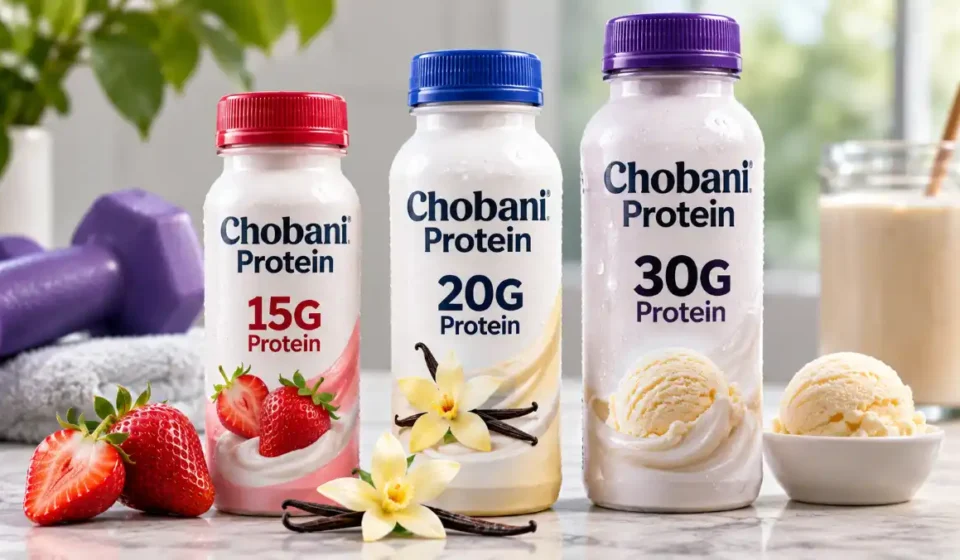

Chobani protein drinks are ready-to-drink, Greek yogurt-based beverages that provide 15, 20, or 30 grams of complete protein per bottle. They’re lactose-free, contain zero added sugar, and make it easy to increase your protein intake without mixing powders. The 15G version is a convenient option for smaller snacks, the 20G drink offers a middle ground, and the 30G bottle provides more protein for people with higher dietary needs.
So, are Chobani protein drinks healthy and worth buying? For many people, they can be a nutritious choice, especially if you’re looking for dairy protein, calcium, and convenience. Still, calories, total sugar, ingredients, and prices vary between products. And because they’re made with milk, they’re unsuitable for anyone with a milk protein allergy.
Chobani Protein Drinks Compared: 15G vs. 20G vs. 30G
Chobani’s high-protein lineup includes three protein strengths to suit different needs. The range also incorporates drinks previously sold under the Chobani Complete name.
The comparison below uses specific US flavors and their listed nutrition facts. Prices are approximate online examples from November 2026 and may vary by retailer or location.
| Feature | Chobani 15G Strawberries & Cream | Chobani 20G Vanilla | Chobani 30G Vanilla Ice Cream |
| Bottle size | 7 fl oz | 10 fl oz | 14 fl oz |
| Protein | 15 g | 20 g | 30 g |
| Calories | 120 | 170 | 220 |
| Total sugar | 8 g | 11 g | 11 g |
| Added sugar | 0 g | 0 g | 0 g |
| Carbohydrates | 9 g | 13 g | 17 g |
| Total fat | 2 g | 3 g | 4 g |
| Approximate US price | $2.39 | $2.77 | 3.67–4.19 |
| Main advantage | Smaller protein snack | Moderate protein serving | More protein per bottle |
| Main limitation | Less protein | Costs more than 15G | Larger serving and higher cost |
If you want something light between meals, the 15G drink may be enough. The 20G bottle provides a more substantial serving, while the 30G version makes sense when you want more protein without having another snack.
Price matters, too. Based on the examples above, you’re paying approximately $3.19 per 20 grams of protein with the 15G drink, $2.77 with the 20G version, and 2.45–2.79 with the 30G bottle. That makes the larger serving potentially better value per gram, although buying more protein than you need isn’t necessarily a saving.
Chobani Protein Drink Ingredients and Nutrition Facts
Most of the protein in Chobani’s drinks comes from strained Greek yogurt. Dairy protein is considered complete because it supplies all nine essential amino acids, which your body needs for functions including muscle repair and growth.
The 20G Vanilla ingredient list includes low-fat Greek yogurt, water, vanilla extract, chicory root fiber, lactase, stevia, monk fruit extract, fruit pectin, and locust bean gum.
Each ingredient has a purpose. Lactase helps break down lactose, making the drink suitable for many people with lactose intolerance. Stevia and monk fruit provide sweetness, while pectin and gums help give the beverage its consistency.
Zero added sugar doesn’t mean sugar-free. Chobani 20G Vanilla, for example, contains 11 grams of total sugar despite having no added sugar. As the FDA explains about total and added sugars, naturally occurring sugars in milk and fruit count toward total sugar but aren’t necessarily classified as added sugars.
These drinks also provide useful nutrients, including calcium and vitamin B12, although amounts differ by product. The 15G Strawberries & Cream drink contains 220 mg of calcium. Meanwhile, the 30G Vanilla Ice Cream bottle provides 350 mg of calcium and 2.4 mcg of vitamin B12.
Some formulations contain live and active yogurt cultures. However, the presence of cultures doesn’t automatically establish specific probiotic benefits, and strains or quantities may differ between products.
It’s also important to remember that lactose-free doesn’t mean dairy-free. Anyone with a milk protein allergy should avoid these beverages. Some people may experience digestive discomfort from dairy proteins, chicory root fiber, or certain sweeteners, although these ingredients aren’t problematic for everyone.
Compared with regular Chobani Greek yogurt cups, the drinks are designed for portability and easy sipping. Their ingredients, serving sizes, and nutrition profiles also differ, so it’s worth comparing the labels rather than assuming they’re interchangeable.
Are Chobani Protein Drinks Healthy?
For many adults, Chobani High Protein Drinks can fit comfortably into a balanced diet. Their biggest advantage is providing a substantial serving of complete protein without needing to prepare a shake or meal.
Depending on your needs, they may be useful for:
- Muscle recovery: Protein supplies amino acids your muscles need for repair. Building muscle also requires appropriate training, adequate nutrition, and recovery.
- Weight management: Protein can help you feel satisfied after eating, but drinking a high-protein beverage doesn’t automatically lead to weight loss.
- Busy mornings: A refrigerated bottle offers a quick source of protein when there’s little time to prepare breakfast.
- Between-meal snacking: The 15G and 20G versions can help you reach your daily protein needs without preparing another meal.
The 30G drink may be helpful if your protein requirements are higher, particularly alongside regular exercise. Still, more protein isn’t always better. Your daily intake, activity level, calorie needs, and overall eating habits matter more than choosing the bottle with the largest number on its label.
These drinks also aren’t necessarily complete meal replacements. If you’re having one for breakfast, you may need additional fiber, carbohydrates, healthy fats, and other nutrients from foods such as fruit, oats, or nuts.
Chobani Protein Drink Flavors, Taste, and Texture
Chobani offers several flavors across its protein drink range, although the selection depends on the protein strength and retailer.
- 15G: Tropical Punch and Strawberries & Cream.
- 20G: Vanilla, Strawberries & Cream, Mixed Berry Vanilla, and Cookies & Cream.
- 30G: Vanilla Ice Cream.
Other flavors may appear in individual retail listings, so availability is worth checking before shopping.
Since these beverages are made with Greek yogurt, they have a different flavor profile from many conventional protein shakes. The cultured dairy base can introduce a slightly tangy taste, while fruit ingredients and sweeteners affect how sweet each variety tastes.
Texture and aftertaste are largely matters of preference. If you already enjoy drinkable Greek yogurt, Chobani’s cultured dairy character may appeal to you. Someone expecting a traditional milkshake-style protein drink, however, might prefer a different formulation.
Customer ratings are positive for several varieties, including Mixed Berry Vanilla. Even so, ratings don’t tell the whole story. Sweetness, thickness, and aftertaste can influence whether you enjoy a particular flavor, and those preferences vary considerably.
If you’re trying Chobani protein drinks for the first time, buying a single bottle before committing to a multipack is a sensible approach.
Chobani vs. Other Protein Drinks
Chobani isn’t the only option for convenient protein. Oikos Pro, Fairlife Core Power, and Premier Protein offer competing dairy-based beverages, but their ingredients and nutritional profiles aren’t identical.
| Product and flavor | Size | Protein | Calories | Total sugar |
| Chobani 20G Vanilla | 10 fl oz | 20 g | 170 | 11 g |
| Oikos Pro Strawberry Banana cultured dairy drink | 7 fl oz | 23 g | 120 | 4 g |
| Fairlife Core Power Chocolate | 14 fl oz | 26 g | 170 | 5 g |
| Premier Protein Chocolate | 11 fl oz | 30 g | 160 | 1 g |
All four examples contain dairy protein. Chobani, Oikos Pro, and Fairlife Core Power offer lactose-free formulations, while the lactose suitability of Premier Protein should be checked against the specific product information.
Oikos Pro is another cultured dairy beverage, while Fairlife Core Power uses ultra-filtered milk. Premier Protein relies on a dairy-derived protein blend and includes additional vitamins and minerals.
The Premier Protein Chocolate shake in this comparison delivers more protein and less total sugar than Chobani 20G Vanilla. That may appeal to some buyers, but protein numbers alone don’t determine the better choice. Ingredients, sweetness, texture, serving size, and price can matter just as much.
Neither yogurt-based drinks nor conventional protein shakes are inherently healthier. Compare products according to your nutritional needs and preferences. If you’re also considering powdered supplements such as those covered in our Ascent Protein review, remember to factor in preparation, portability, and storage.
Where to Buy Chobani Protein Drinks and Which One to Choose
Chobani High Protein Drinks are sold through major US grocery retailers, including Walmart, Target, and Kroger. Local inventory varies, so not every store will carry every protein strength or flavor.
In November 2026, observed single-bottle prices were approximately $2.39 for 15G, $2.77 for 20G, and 3.67–4.19 for 30G. Some 20G four-packs were listed around $9.67, bringing the price to roughly $2.42 per bottle. Promotions and retailer pricing can change these figures.
Because they’re refrigerated dairy drinks, unopened bottles should be kept refrigerated according to their packaging. Always check the printed expiration or best-by date, and follow the bottle’s instructions for storage and consumption after opening.
Which Chobani protein drink is best?
Choose the 15G version if you want a smaller protein snack. The 20G drink offers a practical middle ground for everyday use, while the 30G option may suit someone who needs a larger protein serving after exercise or during a busy day.
Ultimately, Chobani protein drinks are worth considering if you enjoy Greek yogurt, tolerate dairy protein, and appreciate the convenience of a ready-to-drink option. The main things to weigh before buying are price, refrigerated storage, flavor preferences, and how much protein you actually need.
Frequently Asked Questions
Do Chobani protein drinks contain probiotics?
Some Chobani protein drinks contain live and active yogurt cultures, but that doesn’t necessarily mean every variety provides the same probiotic strains or benefits. Check the individual product label for specific information, and don’t assume that live cultures guarantee improved digestive health.
Can a Chobani protein drink replace breakfast?
A Chobani protein drink can be part of breakfast, especially when you’re short on time, but it may not provide all the nutrients you’d get from a balanced meal. Pairing it with fruit, whole grains, nuts, or another nutritious food can make breakfast more satisfying and nutritionally complete.


[…] suitable portions of legumes for protein. For those who consume dairy, convenient options such as Chobani protein drinks may help on busy days, although their carbohydrate content should be considered when following a […]