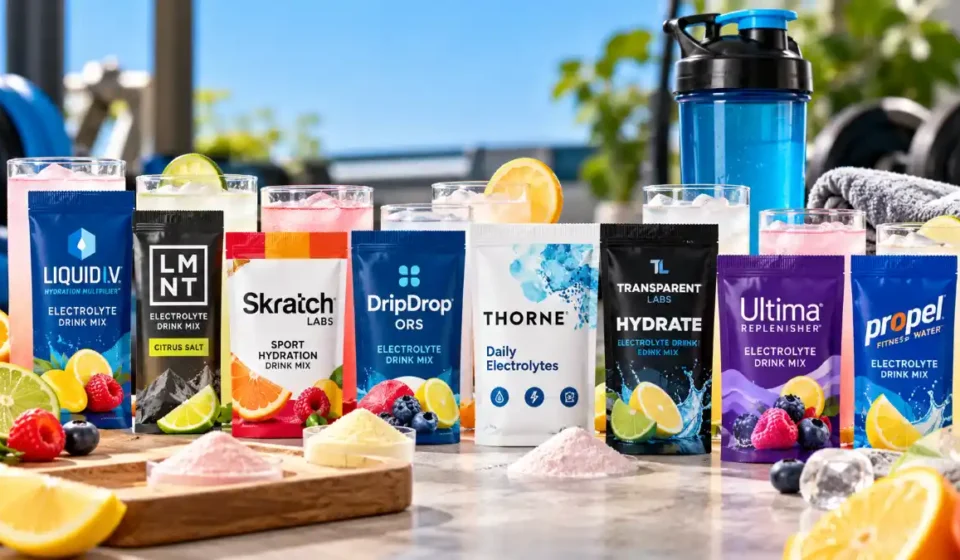

The best electrolyte powder depends on how much you sweat, your activity level, and what you want from a hydration drink. Liquid I.V. Hydration Multiplier is a versatile option for replacing electrolytes, while LMNT’s high-sodium formula may be better suited to heavy sweaters. Skratch Labs Sport Hydration Drink Mix provides carbohydrates for endurance exercise, Thorne Daily Electrolytes offers NSF Certified for Sport certification, and Ultima Replenisher is a sugar-free, low-sodium option for everyday use.
Electrolyte powders can help replace sodium and other minerals lost during prolonged workouts, heavy sweating, or extended heat exposure. They’re not essential for everyone, though. Most healthy adults can meet their daily hydration needs through water and a balanced diet. Choosing the right powder comes down to your electrolyte losses, ingredient preferences, and budget.
Best Electrolyte Powders Compared
These eight electrolyte powders serve different hydration needs. Comparing their mineral content, sugar levels, and costs can help you narrow down your options.
| Electrolyte Powder | Best For | Sodium | Potassium | Magnesium | Sugar | Calories | Approx. Price/Serving |
| Liquid I.V. Hydration Multiplier | General hydration support | 500 mg | 370 mg | Not listed | 11 g | 45 | $1.56 |
| LMNT Zero-Sugar | Heavy sweating | 1,000 mg | 200 mg | 60 mg | 0 g | Varies | $1.50 |
| Skratch Labs Sport Hydration | Endurance exercise | 370–400 mg | Varies | Varies | 17–19 g | 80 | $1.20 |
| DripDrop Original | Sodium-glucose rehydration | 330 mg | 180 mg | 40 mg | 7 g | 35 | Varies |
| Thorne Daily Electrolytes | Certified sport supplementation | 480 mg | 99 mg | 40 mg | 0 g | 5 | $1.33 |
| Transparent Labs Hydrate | Sugar-free workout hydration | 500 mg | 250 mg | 50 mg | 0 g | Varies | Varies |
| Ultima Replenisher | Low-sodium everyday use | 55 mg | 250 mg | 100 mg | 0 g | 0 | From $1.05 |
| Propel Fitness Powder | Budget-friendly candidate | 260 mg | 80 mg | Not listed | 0 g | Varies | Varies |
Values are per labeled serving, usually one stick, packet, or scoop. They do not represent equal volumes of prepared drinks. Nutritional values, including those for Skratch Labs, may differ by flavor. Prices are approximate U.S. listings from October 2026 and can change with package size, retailer, or promotions. “Not listed” does not necessarily mean a mineral is absent.
Thorne Daily Electrolytes has verified NSF Certified for Sport listings. Equivalent sport certifications weren’t established for the other products in this comparison, although that doesn’t necessarily indicate poor manufacturing quality. Each option has advantages and limitations worth considering before purchasing.
1. Liquid I.V. Hydration Multiplier — Best General-Purpose Option
Liquid I.V. delivers 500 mg of sodium and 370 mg of potassium per stick, along with 11 g of sugar. The individually packaged sticks are easy to carry, making them convenient for workouts, travel, or days when you’re sweating more than usual.
The sugar supports sodium-glucose absorption, but it adds carbohydrates you might not need for ordinary daily hydration. At approximately $1.56 per stick, Liquid I.V. is also one of the more expensive choices. It’s a convenient general-purpose option, not a formula proven to hydrate everyone better than competing products.
2. LMNT Zero-Sugar — Best for Heavy Sweaters
LMNT stands out for its substantial sodium content: 1,000 mg per stick, alongside 200 mg of potassium and 60 mg of magnesium. This makes it worth considering for endurance athletes or people who lose significant amounts of sodium through sweat.
The formula contains no sugar. Most flavored varieties use stevia, while Raw Unflavored contains no sweeteners. You can check the different formulations in LMNT’s official ingredient information.
Its biggest limitation is that 1,000 mg of sodium is more than many people need from a single drink. The noticeably salty flavor may also take some getting used to.
3. Skratch Labs Sport Hydration — Best for Endurance Athletes
Skratch Labs is designed for activities where replacing electrolytes and supplying carbohydrates both matter. Depending on the flavor, a serving provides approximately 370–400 mg of sodium and 17–19 g of sugar.
Those carbohydrates help fuel longer workouts while supporting fluid absorption. The Sport Hydration Drink Mix ingredients include cane sugar and dextrose rather than artificial sweeteners.
That makes Skratch Labs a sensible option for runners, cyclists, and endurance athletes. For a short walk or light workout, however, the extra carbohydrates may offer little benefit.
4. DripDrop Original — Best for Sodium-Glucose Hydration
DripDrop Original combines 330 mg of sodium, 180 mg of potassium, and 40 mg of magnesium with 7 g of sugar per serving.
Its sodium-glucose combination supports intestinal fluid absorption, making it an option for replacing fluid and electrolytes after substantial sweating. It also contains less sugar per serving than several conventional sports drink formulations.
One consideration is that DripDrop Original contains sucralose. Anyone specifically avoiding artificial sweeteners may prefer another product. Although its formulation draws on oral rehydration principles, it shouldn’t automatically be considered interchangeable with a standard medical oral rehydration solution.
5. Thorne Daily Electrolytes — Best for Sport Certification
Thorne Daily Electrolytes provides 480 mg of sodium, 99 mg of potassium, and 40 mg of magnesium per serving. The formula also includes calcium and chloride.
Its standout feature is independent sport certification. Specified Daily Electrolytes products appear in the NSF Certified for Sport product database, which is particularly relevant for athletes concerned about prohibited substances in supplements.
That additional assurance may justify the approximately $1.33-per-packet cost for competitive athletes. Casual users, however, may find a less expensive formula that meets their hydration needs.
6. Transparent Labs Hydrate — Best Sugar-Free Workout Formula
Transparent Labs Hydrate offers 500 mg of sodium, 250 mg of potassium, and 50 mg of magnesium per serving, without added sugar.
The electrolyte amounts make it a reasonable choice for active people who want to replace minerals without consuming extra carbohydrates. The formula also includes taurine and other ingredients.
Still, those additions don’t automatically make it more effective for hydration than a simpler electrolyte mix. Check the exact ingredient label, serving instructions, and available testing documentation before buying.
7. Ultima Replenisher — Best Low-Sodium Everyday Option
Ultima Replenisher has a different electrolyte profile from the higher-sodium sports formulas. Each serving provides 55 mg of sodium, 250 mg of potassium, and 100 mg of magnesium, with zero sugar and zero calories.
It’s sweetened with stevia and comes in several flavors, making it an option for people who prefer flavored water with added minerals.
The trade-off is its low sodium content. Ultima may suit everyday preferences, but it isn’t an ideal replacement for substantial sodium losses during prolonged exercise. Some packages start around $1.05 per serving, with actual costs depending on the format and retailer.
8. Propel Fitness Powder — Budget-Friendly Alternative
Propel Fitness Powder is worth considering if you want a straightforward, sugar-free electrolyte drink without paying premium supplement prices. It supplies 260 mg of sodium and 80 mg of potassium per serving.
The small packets are convenient for travel and outdoor activities. Propel’s Lemon powder is intended to be mixed with 20 fluid ounces of water.
Its moderate sodium content may be sufficient for some activities but could fall short when sweat losses are substantial. Compare current packet prices and serving counts before deciding whether it offers better value than other powders.
How to Choose the Best Electrolyte Powder
The best electrolyte powder for hydration isn’t necessarily the one with the most minerals. What matters is whether its composition matches your needs.
Sodium plays a major role in maintaining fluid balance, especially when you’re sweating. Potassium supports nerve signaling and muscle function, while magnesium and calcium contribute to normal muscle activity. Chloride helps regulate fluid and acid-base balance.
Before choosing a product, consider the following:
- Activity level: Long runs, cycling sessions, outdoor work, and heavy sweating may call for more sodium than ordinary daily activities.
- Sugar content: Carbohydrates can provide useful fuel during endurance exercise. Sugar-free formulas may be preferable when additional energy isn’t needed.
- Ingredients: Check for artificial sweeteners, stevia, flavorings, and anything that could cause digestive discomfort.
- Testing: Competitive athletes should look for independently verifiable certifications, particularly NSF Certified for Sport or Informed Sport.
- Value: Compare the cost per serving alongside electrolyte amounts, packet counts, and recommended water volumes.
Taste matters, too. Even a well-formulated powder may not be a practical choice if you find it unpleasantly salty, excessively sweet, or difficult to tolerate during exercise.
When Do You Actually Need Electrolyte Powder?
Electrolyte powders are most useful when fluid and mineral losses are greater than usual, such as during endurance events, demanding outdoor work, or prolonged activity in hot and humid weather.
Your requirements depend on how much you sweat, the sodium concentration of your sweat, exercise duration, weather conditions, and individual health. A high-sodium product might be appropriate for one athlete but unnecessary for another.
For everyday activities and many shorter workouts, water and a balanced diet generally do the job. The NIH Office of Dietary Supplements’ hydration guidance explains that most healthy people can replenish routine electrolyte losses through food and water, while longer periods of exercise or physical work may increase the usefulness of electrolyte drinks.
Drinking excessive amounts of fluid can also be dangerous, particularly during endurance events, because it can contribute to dangerously low blood sodium levels. More water isn’t always better.
Electrolyte Powders vs. Oral Rehydration Solutions
Sports electrolyte powders and medical oral rehydration solutions (ORS) aren’t interchangeable.
Sports mixes are generally intended to help replace fluid and electrolytes lost during physical activity. Medical ORS contains carefully balanced amounts of glucose and electrolytes to address dehydration associated with illnesses such as diarrhea.
For significant diarrhea-related dehydration, an appropriate ORS is generally preferable to an ordinary sports drink. The CDC’s clinical guidance on diarrheal illness explains why typical sports drinks aren’t suitable substitutes for ORS when treating substantial fluid losses from diarrhea.
Severe dehydration, confusion, fainting, or being unable to keep fluids down requires prompt medical assessment. Electrolyte powders shouldn’t delay necessary treatment.
Are Electrolyte Powders Safe for Daily Use?
Electrolyte powders can be suitable for regular use in certain circumstances, but most people don’t need them every day.
Consuming more sodium than you need may be particularly concerning if you have high blood pressure or heart failure. Kidney disease, conditions affecting potassium balance, and medications that alter potassium levels also require additional caution. Anyone following prescribed sodium or fluid restrictions should get medical guidance before using electrolyte supplements regularly.
Always follow the manufacturer’s mixing instructions. Products differ considerably in concentration and recommended water volume, so using less water than directed can create a stronger drink than intended.
Store unused powder in a cool, dry place with its packaging properly sealed. Once mixed, follow the product’s storage directions rather than assuming every prepared drink has the same shelf life.
Read also: Best Electrolyte Powder
Frequently Asked Questions
Can electrolyte powder prevent muscle cramps?
Electrolyte replacement may help when muscle cramps are related to substantial electrolyte losses, but cramps can also involve fatigue, exercise intensity, and other factors. Drinking an electrolyte mix doesn’t guarantee protection against exercise-related cramps. Choosing a suitable fluid and electrolyte replacement strategy may help during prolonged activity, but it’s only one part of managing cramp risk.
Is an electrolyte powder without artificial sweeteners healthier?
Not automatically. A powder without artificial sweeteners may be more appealing if you dislike certain ingredients or experience digestive discomfort from them. However, its overall suitability also depends on sodium content, added sugar, other ingredients, and your individual needs.
Sugar-free electrolyte powders can still help replace electrolytes and fluids. Glucose isn’t necessary for every hydration situation, although it plays a useful role in some endurance drinks and properly formulated oral rehydration solutions.