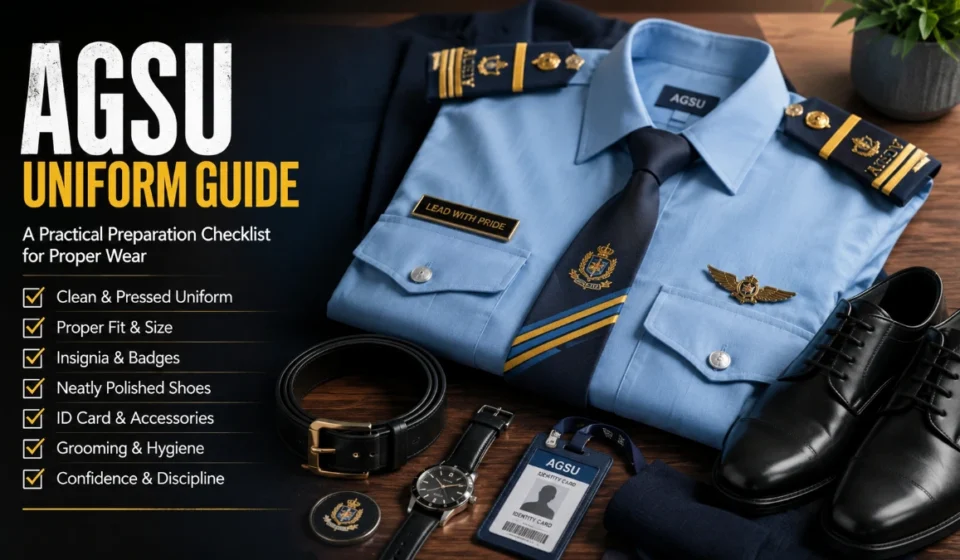

Agsu Uniform Guide: 8 Powerful Steps for Better Uniform Preparation
Preparing an Army Green Service Uniform is easier when the process starts with the required configuration and ends with a deliberate inspection. A complete agsu uniform guide should help a Soldier identify the major components, distinguish Class A from Class B, check authorized insignia and accessories, and know when official Army guidance must be consulted.
The AGSU serves as the Army’s everyday service uniform for business and office environments. According to current Army information, all Soldiers are required to have an AGSU by October 1, 2027; at that point, the Army Service Uniform becomes optional for formal and ceremonial use.
Current AGSU Guidance at a Glance
As of September 2026, Army uniform information points Soldiers to AR 670-1, DA Pam 670-1, and Army Directive 2025-18 for AGSU-related standards. Army Directive 2025-18 also updated or clarified several uniform-wear details, including AGSU nameplate placement and optional items.
Because policy can change, use this agsu uniform guide as a preparation framework rather than as a substitute for the latest official regulation, directive, commander guidance, or Army wear guide.
Start With the Right AGSU Configuration
Before checking individual items, determine which AGSU configuration applies to the event or duty requirement.
The Army describes three major variations: Class A, Class B, and the AGSU Tropical Dress Variation. Class A uses the service coat and is approved for evening and formal wear. Class B omits the coat, while the Tropical Dress Variation is a Class B configuration with ribbons and serves as a hot-weather equivalent of Class A.
| Configuration | Basic Preparation Focus |
| Class A | Complete service-coat setup, shirt, neckwear, insignia, awards, accessories, trousers/slacks, footwear and headgear as required |
| Class B | Shirt-based setup without the service coat; verify authorized insignia, accessories and neckwear requirements |
| Tropical Dress Variation | Class B-based hot-weather setup with ribbons; verify the current authorized arrangement before wear |
The exact configuration may also depend on the occasion and command direction, so confirm that first.
What Is Included in the AGSU?
Official Army equipment information lists clothing-bag items including the Heritage Green garrison cap and service coat, Heritage Tan long- and short-sleeve shirts/overblouses, Heritage Green necktie, Heritage Taupe trousers/slacks, Heritage Walnut belt and Oxford shoes, antique brass belt buckle, Heritage Walnut socks and gloves, and Heritage Green all-weather coat.
Optional items include the Heritage Taupe skirt, Heritage Walnut pumps, Heritage Green service cap, bomber jacket, windbreaker, Eisenhower jacket and V-neck sweater.
A practical agsu uniform guide should therefore go beyond checking only the coat and trousers. Preparation should cover every item required for the specific authorized configuration.
AGSU Preparation Checklist: 8 Steps
1. Confirm the Uniform Requirement
Determine the authorized configuration before assembling the uniform. Check the occasion, command instructions and current Army guidance.
This prevents a common problem: preparing the correct individual pieces for the wrong wear situation.
2. Inspect the Major Uniform Components
Lay out the uniform before dressing and check each major component.
| Component Area | What to Check |
| Coat or shirt | Correct configuration, fit, cleanliness and serviceable condition |
| Trousers or slacks | Proper fit, condition and overall appearance |
| Footwear | Correct authorized type, clean condition and presentable finish |
| Headgear | Correct authorized item for the configuration and situation |
| Neckwear | Correct use for the shirt and configuration |
| Accessories | Authorized items and proper combination |
| Insignia and badges | Authorization and placement under current guidance |
| Nameplate | Correct type and placement for the garment being worn |
3. Check Fit and Overall Condition
Proper fit supports a professional appearance. Check that the coat, shirt and trousers or slacks sit correctly and that clothing is clean, pressed as appropriate, and free of obvious damage.
Do not wait until immediately before formation, inspection or an event to discover a tailoring or maintenance problem.
4. Verify Neckwear
Neckwear requirements vary by configuration. Army guidance states that the Heritage Green necktie is worn with Class A. It is required with the long-sleeve shirt when worn without the Class A coat and is optional with the short-sleeve Class B shirt.
Because the exact combination matters, neckwear should be checked as part of the configuration rather than treated as a last-minute accessory.
5. Position the Nameplate Correctly
Army Directive 2025-18 requires the AGSU nameplate on the service coat, short- and long-sleeve shirts, Ike jacket and Heritage 564 pullover.
For male personnel, the directive places the nameplate centered on the wearer’s right breast-pocket flap on the AGSU shirt, coat and Ike jacket. Female placement varies by garment; on the Class B shirt and Ike jacket, the directive specifies placement 1 to 2 inches above the top button and centered horizontally on the wearer’s right side.
Use the directive or current official wear guide for the exact placement applicable to the garment and wearer.
6. Check Insignia, Ribbons, Badges and Accessories
Insignia, ribbons and badges communicate military information, so placement should never be based on memory alone.
For every item, confirm:
- It is authorized for the uniform and configuration.
- The correct version of the item is being used.
- Placement and spacing follow current guidance.
- The combination does not conflict with other authorized items.
This is where an agsu uniform guide is most useful as a checklist, but exact measurements and unusual combinations should always be verified from current Army instructions.
7. Review Shoes, Belt and Headgear
Small visual details can affect the entire presentation. Check that footwear is the correct authorized type and clean, that the belt and buckle are properly assembled, and that the required headgear matches the configuration and situation.
Also make sure optional outerwear or accessories are actually authorized for the planned wear.
8. Perform a Full Final Inspection
Dress completely and inspect the uniform as a finished system rather than as separate pieces.
Check:
- Alignment and symmetry
- Fit and cleanliness
- Nameplate position
- Insignia
- Ribbons and badges
- Accessories
- Belt and buckle
- Footwear
- Headgear
If any detail is uncertain, verify it before wear.
Understanding Why Each Component Matters
A strong agsu uniform guide should explain why the checklist exists, not merely name the pieces.
Fit: Correct fit contributes to the intended professional appearance and helps the uniform look consistent.
Condition: Clean, maintained and serviceable components prevent avoidable appearance problems.
Authorized combinations: Military uniforms are assembled according to established standards rather than personal preference.
Accurate placement: Insignia, badges, ribbons, nameplates and other accoutrements must be positioned according to rules applicable to the garment and configuration.
AGSU Class A and Class B Preparation Differences
The most important practical distinction is the coat. The Army’s current uniform information describes Class A as the configuration in which all components are worn, while Class B does not include the coat.
| Feature | Class A | Class B |
| Service coat | Worn | Not worn |
| Shirt | Worn as part of the configuration | Primary visible garment |
| Necktie | Worn | Optional with short-sleeve shirt; verify long-sleeve requirements |
| Insignia/accoutrements | Set up for complete coat configuration | Follow current rules for shirt-based configuration |
| Preparation priority | Complete uniform alignment and coat setup | Shirt, nameplate, insignia, neckwear and accessory accuracy |
These differences are why one generic setup should not be assumed to work for every event. A practical agsu uniform guide should therefore separate Class A and Class B checks instead of treating them as interchangeable.
Common AGSU Preparation Problems
Assuming One Checklist Fits Every Situation
A general checklist helps organize preparation, but the authorized configuration still depends on the wear situation and current instructions.
Following Outdated Information
Older videos, diagrams, forum posts and saved images may predate newer Army guidance. Current official sources should control when instructions conflict.
Checking Insignia Too Late
Placement errors are easier to correct when ribbons, badges, nameplates and insignia are reviewed before the uniform is needed.
Ignoring Optional-vs.-Required Differences
An item that is authorized is not automatically required in every configuration. Confirm its status rather than assuming.
Treating Appearance as the Only Standard
A uniform can look neat and still be configured incorrectly. Appearance and authorization both matter.
A Simple 60-Second Final Review
Before leaving for formation, duty or an event, use this agsu uniform guide as a final sequence:
- Confirm the required configuration.
- Check coat or shirt and trousers/slacks.
- Confirm neckwear.
- Check nameplate position.
- Review insignia, ribbons, badges and accessories.
- Verify belt, footwear and headgear.
- Look for fit, alignment, cleanliness and symmetry.
- Verify anything uncertain against current official guidance.
Why Official Verification Is Important
The agsu uniform guide provides a repeatable preparation process, but Army publications remain the authority for exact wear requirements.
Verification is especially important for authorized combinations, insignia placement, badge and ribbon arrangements, optional items, commander-authorized variations and policy changes. The Army’s uniform resource currently directs Soldiers to AR 670-1, DA Pam 670-1 and Army Directive 2025-18 for applicable AGSU standards.
Frequently Asked Questions
Confirm which AGSU configuration is required for the situation. That determines which components, neckwear, accessories and setup rules apply.
Class A includes the service coat. Class B is a shirt-based configuration without the coat. Neckwear and authorized insignia or accessories can also vary by configuration.
The Heritage Green necktie is optional with the short-sleeve Class B shirt. Current guidance requires it with the long-sleeve shirt when that shirt is worn without the Class A coat.
Official Army equipment information lists major items including the service coat, garrison cap, long- and short-sleeve shirts/overblouses, necktie, trousers/slacks, belt, buckle, Oxford shoes, socks, gloves and all-weather coat.
Yes. Current Army guidance requires the AGSU nameplate on specified garments, including the AGSU coat and short- and long-sleeve shirts. Exact placement depends on the garment and wearer.
Placement depends on the item, garment, configuration and current Army instructions. Use the current official wear guide, regulation or applicable directive for exact measurements rather than relying on memory.
No. A checklist helps organize preparation but does not replace AR 670-1, DA Pam 670-1, Army directives, commander instructions or other applicable official guidance.
The Army states that all Soldiers are required to have the AGSU by October 1, 2027. At that point, the ASU becomes optional for formal and ceremonial use.
The Army describes it as a Class B configuration with ribbons and as an equivalent Class A option for hot weather. Soldiers should verify current instructions before setting it up.
One of the most preventable errors is assuming a familiar setup is automatically correct for every situation. A reliable agsu uniform guide starts with configuration confirmation, followed by placement and optional-versus-required checks.